- July 26, 2026
- 10 min read
SASHIMI
Table of Contents
- 1. Why This Question Comes Up at Every Sushi Counter
- 2. What Otoro Actually Is
- 3. Why Bluefin Tuna Is Naturally Scarce
- 4. How Conservation Rules Limit Supply
- 5. Why Is Otoro So Expensive: The Demand Side
- 6. How Restaurants Set the Price on Your Plate
- 7. Frequently Asked Questions
- 8. What This Means the Next Time You Order
A single piece of otoro nigiri can cost more than an entire plate of California rolls, and most diners order it anyway without asking why. Why is otoro so expensive compared to every other cut of tuna on the same fish?
The short answer involves biology, international conservation policy, and decades of shifting demand, not just a kitchen marking up a fancy-sounding menu item. This guide breaks down what actually drives the price, piece by piece.
1. Why This Question Comes Up at Every Sushi Counter
Otoro sits at the top of nearly every sushi menu’s price list, often two or three times the cost of standard tuna. That gap surprises people because otoro comes from the exact same fish as the akami sitting a few inches away on the same cutting board, cut by the same chef, on the same day.
Understanding why is otoro so expensive means separating three different forces that all push in the same direction: how much of it a single fish actually produces, how tightly its source species is regulated, and how much of the world wants to eat it.
None of these forces operate in isolation. Together they explain a price gap that otherwise looks arbitrary, and once each piece is broken down individually, the price on the menu stops feeling like a mystery.
2. What Otoro Actually Is
Otoro is the fattiest section of a tuna’s belly, typically the area closest to the head and lower body. For a full breakdown of how this cut compares to others in flavor and texture, our guide to the best fish for sashimi covers each grade in more depth.
Bluefin tuna develops this fat as an energy reserve for long migrations through cold water. It concentrates almost entirely in the belly rather than spreading evenly through the fish.
Tuna is generally divided into three grades based on that fat content:
- Akami: the lean loin meat, deep red, firm, and the most abundant cut on the fish.
- Chutoro: the medium-fatty belly section, offering a balance between akami’s clean flavor and otoro’s richness.
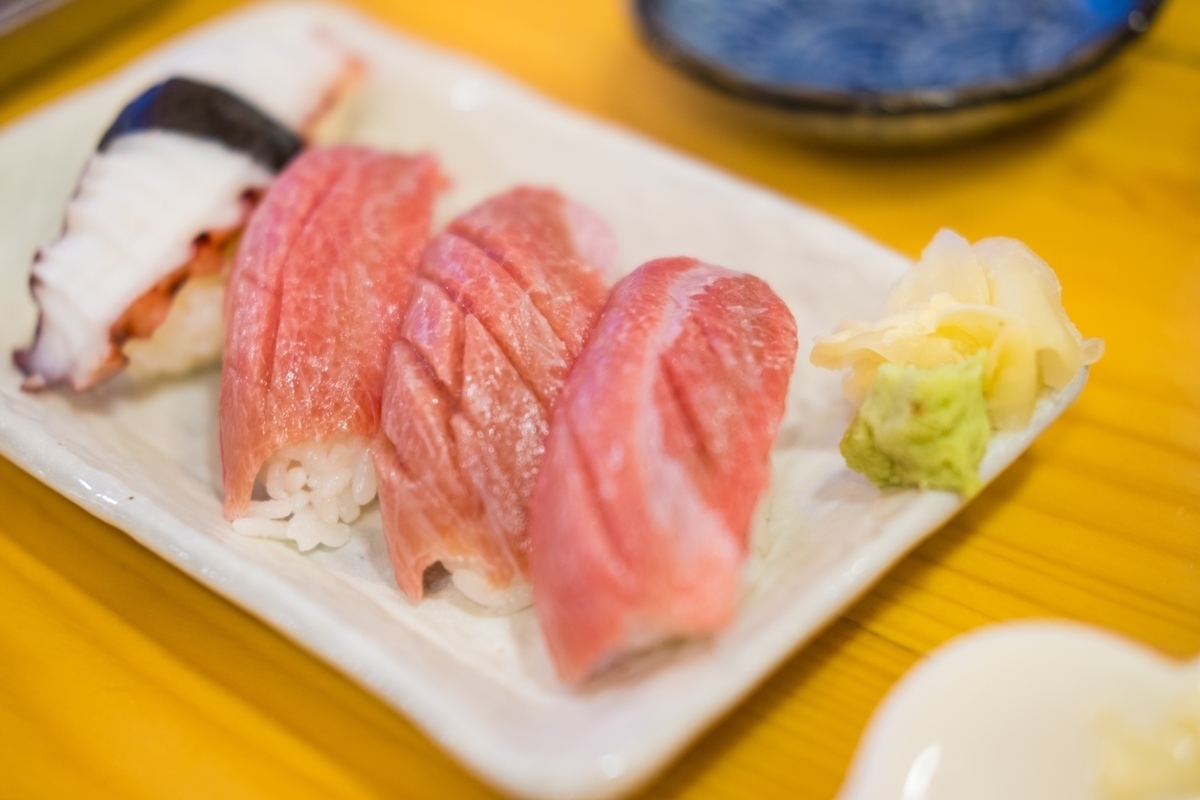
- Otoro: the fattiest belly section, pale pink from heavy marbling, with a texture that softens almost immediately in the mouth.
Otoro typically makes up a small fraction of a tuna’s total weight, sometimes as little as a few percent depending on the individual fish and how it was raised. A large bluefin might yield enough akami to fill dozens of orders, but only a limited number of true otoro portions, which is the first structural reason the price gap exists before any economics of scarcity or demand even enter the picture.
3. Why Bluefin Tuna Is Naturally Scarce
Bluefin tuna is not scarce because it is rare to catch. It is scarce because of how slowly the species reproduces relative to demand. According to the NOAA Fisheries profile on western Atlantic bluefin tuna, bluefin tuna grow slowly, can live twenty years or more, and typically do not spawn until around age eight, which limits how quickly a population can rebuild after heavy fishing pressure.
That slow biology matters directly to answering why is otoro so expensive in practical terms. A species that reproduces quickly can absorb high demand without a lasting supply squeeze. Bluefin cannot.
Every large, older fish taken out of the population represents years of growth that cannot be quickly replaced. Larger, older fish are exactly the ones that produce the richest, most marbled otoro.
Fat content itself is also tied to age and size. Younger, smaller bluefin carry less belly fat, which means the most prized otoro consistently comes from mature fish that take the longest to reach that size in the first place. A fish caught too young simply cannot produce grade-A otoro no matter how it is handled afterward.
4. How Conservation Rules Limit Supply
Because bluefin populations declined sharply from decades of heavy fishing, international regulators now cap how much can legally be caught each year.
According to the Monterey Bay Aquarium Seafood Watch assessment of Pacific bluefin tuna, certain bluefin fisheries have only recently improved from the lowest sustainability rating after a multi-decade rebuilding effort, and some fishing methods remain restricted.
These restrictions function as a hard ceiling on supply that has nothing to do with kitchen markup:
- Annual catch quotas set by international fisheries commissions limit total volume regardless of demand.
- Certain fishing methods and regions remain closed or limited to protect spawning populations.
- Recovery plans intentionally keep harvest below what the market would otherwise absorb.
None of these rules target otoro specifically. They apply to the whole fish. But because otoro represents such a small percentage of each fish’s total yield, any reduction in total bluefin supply hits otoro availability harder than it hits akami, simply because there was so little otoro to begin with.
5. Why Is Otoro So Expensive: The Demand Side
Supply constraints only explain half the story. Why is otoro so expensive also comes down to a demand curve that has grown for decades without slowing.
According to the FAO’s GLOBEFISH species analysis on tuna, international trade in fresh and frozen tuna remains heavily shaped by demand for high-value sashimi-grade product, with premium cuts commanding significantly higher prices than tuna destined for canning or general cooking.
Otoro’s popularity outside Japan has grown substantially over the past several decades. What was once considered a byproduct too fatty to preserve well before modern refrigeration is now one of the most requested items at sushi counters worldwide.
That shift moved otoro from a cut with limited buyers to one with global demand competing for a supply that has not grown to match it.
The result is a straightforward economic pattern: a naturally limited supply, a legally capped supply, and a demand curve that keeps climbing. Prices respond to exactly that combination.
6. How Restaurants Set the Price on Your Plate
By the time otoro reaches a sushi counter, its price already reflects everything above, plus a few additional costs specific to serving it.
- Sourcing cost: Restaurants pay a premium at the wholesale level before a single piece is ever cut, since suppliers price otoro according to the same scarcity and demand pressures already covered.
- Handling and waste: Otoro’s high fat content makes it more delicate to store and slice, and a kitchen accounts for some loss during trimming.
- Portion consistency: Because usable otoro from a single fish is limited, restaurants often price it to reflect genuine scarcity rather than treating it as an unlimited menu item.
- Sourcing reliability: A kitchen that consistently sources genuine, well-marbled otoro, such as the Manhattan Beach, Brooklyn location, is paying for a dependable supplier relationship, not just a single cut of fish.
None of this means every high price is automatically justified. Menu prices vary by restaurant, and the term otoro itself is not a regulated grade, so quality and true fat content can differ between kitchens even at similar price points.
7. Frequently Asked Questions
Is otoro always from bluefin tuna?
Most of the time, yes. Bluefin produces the richest, most marbled otoro, though some restaurants offer otoro-style cuts from bigeye tuna at a lower price point, with a similar but less intense fat content.
Does otoro cost more everywhere, or just in Japan?
Otoro commands a premium worldwide, but the specific price varies by region, sourcing distance, and local demand. Japan often sets the reference price since it remains the largest single market for premium bluefin.
Is chutoro a cheaper substitute for otoro?
Chutoro is genuinely a different cut, not a discount version of otoro. It comes from a less fatty section of the belly and offers a different balance of richness and texture rather than a lesser version of the same thing.
Why does otoro sometimes look pale compared to other tuna?
The pale color comes from the concentration of fat marbling running through the flesh. Leaner cuts like akami stay deep red because they contain far less intramuscular fat.
Is farmed bluefin tuna cheaper than wild-caught?
Farmed bluefin can sometimes be more accessible, but farming bluefin is technically difficult and resource-intensive, so it does not automatically translate into a significantly lower price for otoro specifically.
Will otoro ever become cheaper?
It depends on whether bluefin populations continue recovering under current conservation plans. If stocks rebuild further, supply could loosen slightly, but why is otoro so expensive will likely remain a relevant question for years, since demand has grown just as fast as any recovery in the fish population.
8. What This Means the Next Time You Order
Otoro’s price is not a marketing gimmick built around a trendy Japanese word. It reflects a fish that grows slowly, a supply that regulators intentionally keep limited to protect the species, and a global demand curve that has only grown since otoro became fashionable outside Japan.
Once you understand those three pressures, the answer to why is otoro so expensive stops looking arbitrary. It starts looking like a fairly direct reflection of genuine scarcity meeting genuine demand.
Comparing otoro side by side with chutoro and akami is the clearest way to actually feel the price difference on the plate rather than just reading about it. A full sashimi and sushi menu that includes all three tuna grades makes that comparison easy to do in a single visit.
Key Takeaways
- Otoro is the fattiest section of tuna belly, making up only a small percentage of a fish’s total yield.
- Bluefin tuna grows slowly and matures late, which limits how quickly supply can respond to demand.
- International conservation quotas cap total bluefin catch, tightening otoro availability further since it is such a small share of each fish.
- Global demand for premium sashimi-grade tuna has grown for decades without a matching increase in supply.
- Restaurant pricing reflects wholesale scarcity, delicate handling requirements, and inconsistent portion yield, not just markup.
- Chutoro is a genuinely different cut, not simply a cheaper version of otoro.
COMPARE THE CUTS YOURSELF
Tasting akami, chutoro, and otoro side by side is the easiest way to understand what the price difference actually buys.
DISCLAIMER: Consuming raw or undercooked seafood carries food safety risks. Individuals who are pregnant, elderly, immunocompromised, or have underlying health conditions should consult a healthcare provider before consuming raw seafood.
References
- National Oceanic and Atmospheric Administration. (2024). Western Atlantic bluefin tuna. NOAA Fisheries. https://www.fisheries.noaa.gov/species/western-atlantic-bluefin-tuna
- Monterey Bay Aquarium. (2024). Pacific bluefin tuna. Seafood Watch. https://www.seafoodwatch.org/recommendation/tuna/pacific-bluefin-tuna-60927
- Food and Agriculture Organization of the United Nations. (2025). Species analysis: Tuna. GLOBEFISH. https://www.fao.org/in-action/globefish/species-analysis/tuna/en