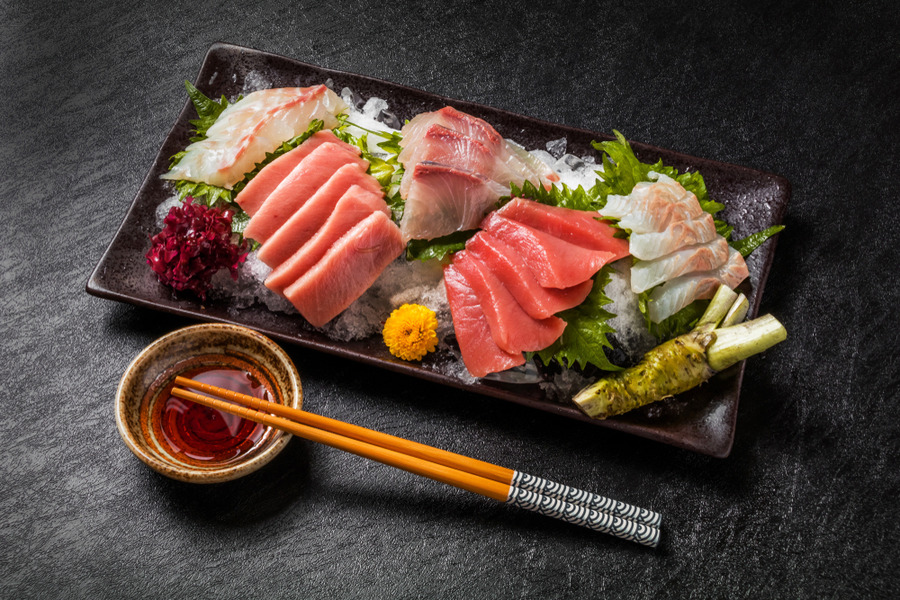
A sashimi platter placed at the center of the table is one of the most visually striking presentations in Japanese cuisine. For a diner who knows how to read it, it is also one of the most informative. Every element on that plate, from the arrangement of the fish to the garnish beneath it to the condiments placed alongside it, has a purpose.
Understanding what each element is designed to do transforms the experience from simply eating raw fish to participating in a deliberate culinary composition.
The Fish: Arranged With Intent
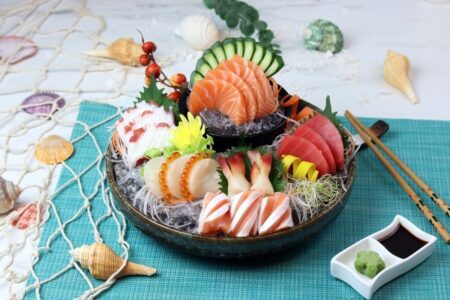
The most obvious element of any sashimi platter is the fish itself, but the way it is arranged tells you as much as what species are present. On a well-composed platter, fish is grouped by species and arranged so that colors contrast with each other. Deep red tuna placed alongside pale white flounder, bright orange salmon adjacent to the more muted tones of yellowtail — these pairings are not random.
The arrangement also typically follows a visual logic that draws the eye across the plate in a deliberate sequence. Larger, more visually commanding cuts are often placed at the back or center of the platter, with smaller or more delicate preparations at the front. This gives the platter a sense of depth and movement that a flat, randomly placed arrangement does not have.
The number of slices per species is also meaningful. Traditional Japanese sashimi service typically presents fish in odd numbers, a convention rooted in Japanese aesthetic culture where even numbers are associated with division and odd numbers with wholeness. Three or five slices of each species is standard on a well-composed platter.
Shiso: More Than a Garnish
Shiso leaves are among the most consistently present elements on a sashimi platter, and they are among the most misunderstood. Most diners treat them as decoration and set them aside. They are not decoration.
Shiso has a distinctive, slightly herbal flavor with notes of mint, basil, and anise that complement raw fish without overpowering it. It is intentionally placed beneath or alongside fish species where that flavor contrast is most beneficial. When eaten alongside a slice of lean white fish or placed between bites of two different species, shiso acts as a palate refresher in the same way pickled ginger does, but with a more complex and integrated flavor.
Shiso also has a mild antibacterial quality that has made it a traditional accompaniment to raw fish in Japanese cuisine for centuries. Its presence on the sashimi platter is rooted in both culinary and practical tradition.
Daikon: The Palate Reset
Shredded daikon radish, appearing as a fine white pile typically placed beneath or alongside the fish on a sashimi platter, serves a dual purpose. Its clean, mildly peppery flavor acts as a palate cleanser between different fish species, allowing each one to be experienced freshly without the lingering influence of the previous bite.
Daikon also provides a textural counterpoint to the soft, yielding texture of raw fish. The slight crunch of properly shredded daikon creates a sensory contrast that makes the transition between bites more defined and more interesting.
Some diners eat a small amount of daikon between each species on the platter. Others use it as a bed on which to rest their chopsticks or as a component eaten alongside the fish. Either approach is appropriate. What matters is understanding that it is a functional element of the sashimi platter rather than filler.
Wasabi: Placed, Not Mixed
A small mound of wasabi is standard on most sashimi platters, typically positioned at one end of the arrangement or in a small separate vessel. Its function is to provide heat and contrast that cuts through the fat of richer fish and refreshes the palate between species.
The key to using wasabi correctly on a sashimi platter is restraint and placement. A small amount placed directly on a slice of fish and eaten together delivers a clean, controlled heat that enhances the flavor of the fish without overwhelming it. Dissolving wasabi into soy sauce, while common, dilutes both elements and makes it difficult to control how much heat accompanies each bite.
Real wasabi, grated fresh from the wasabi rhizome, has a more complex, slightly sweet heat that fades quickly and does not linger the way the horseradish-based substitute found on most platters does. When a kitchen uses real wasabi, it is worth noting as a signal of sourcing quality.
Pickled Ginger: Between Species, Not Alongside Them
Pickled ginger, or gari, appears on virtually every sashimi platter and is one of the most functionally misused elements at the table. It is a palate cleanser, designed to be eaten between different species of fish to reset the palate before the next item.
Eaten alongside a slice of fish, gari introduces a competing flavor that masks rather than enhances the fish. Eaten between species, it provides a clean reset that allows each fish to arrive on the palate without the influence of the previous one.
A sashimi platter with multiple species rewards a systematic approach: eat one species, cleanse with a small piece of gari, move to the next species. This approach extracts significantly more nuance from the platter than eating everything in rapid succession without resetting between them.
Soy Sauce: The Supporting Role
Soy sauce is not meant to be the dominant flavor in a sashimi platter experience. It is a seasoning tool, used lightly to enhance the natural flavor of the fish rather than to replace it. The correct technique is to dip the fish lightly into soy sauce rather than submerging it, and to use soy sauce more sparingly on delicate white fish whose flavor is easily overwhelmed.
Richer, fattier fish like salmon or toro can carry more soy sauce without losing their character. Delicate fish like flounder or sea bass are best eaten with minimal soy or none at all, relying instead on the natural flavor of the fish, the shiso, and a small amount of wasabi for seasoning.
For a broader understanding of how these elements work together across a full order, our post on how sashimi grade affects what arrives on your plate covers the sourcing context behind the quality of what you are working with.
The Order in Which You Eat
A thoughtful approach to the sequence of the sashimi platter makes the experience significantly more rewarding. The general principle is to begin with the most delicate, subtly flavored fish and progress toward richer, more assertive species. Starting with a clean, lean white fish like flounder or sea bass allows its subtlety to register without competition. Moving through yellowtail into salmon and then into richer cuts like toro builds a flavor arc that mirrors the progression of a well-designed meal.
Eating the richest item first tends to flatten everything that follows by comparison. Eating in a light-to-rich sequence preserves the palate’s ability to appreciate each species on its own terms and makes the overall experience more dynamic.
Our post on underrated sashimi cuts every diner should try offers useful context on the flavor profiles of many species you are likely to encounter on a platter, which helps in planning the order of eating.
FAQs
Why is fish on a sashimi platter arranged in odd numbers?
Traditional Japanese aesthetics favor odd numbers as a principle of visual harmony and wholeness. Even numbers are associated with division in Japanese cultural tradition. Presenting three or five slices of each species on a sashimi platter reflects this convention and is a sign of attention to traditional presentation standards.
What is the purpose of shiso leaves on a sashimi platter?
Shiso serves both a flavor and functional purpose. Its herbal, slightly minty flavor complements raw fish and acts as a palate cleanser between bites. It also has mild antibacterial properties that have made it a traditional accompaniment to raw fish in Japanese cuisine. It is meant to be eaten, not set aside.
Should I mix wasabi into soy sauce on a sashimi platter?
Traditional practice places wasabi directly on the fish rather than dissolving it into soy sauce. Mixing the two dilutes both and makes it harder to control the amount of heat per bite. Applying wasabi directly to the fish gives more precise control and preserves the individual flavors of both elements.
In what order should I eat fish from a sashimi platter?
The recommended approach is to start with the most delicate, mildly flavored fish and progress toward richer, more assertive species. This light-to-rich sequence preserves the palate and allows each species to be experienced without the competing influence of a richer fish eaten previously.
What is pickled ginger for on a sashimi platter?
Pickled ginger is a palate cleanser intended to be eaten between different fish species rather than alongside them. A small piece between each species resets the palate so the next fish arrives on a clean slate. Eating ginger with the fish rather than between them introduces a competing flavor that masks the natural taste of what you are eating.
Every Element Has Earned Its Place
A well-composed sashimi platter is a considered object. Nothing on it is there by accident. The arrangement of the fish, the shiso, the daikon, the gari, the wasabi, the soy sauce — each element has a role that has been refined over centuries of Japanese culinary practice.
Engaging with the platter as a complete composition rather than a collection of individual items produces a fundamentally richer experience. If you want to encounter that kind of deliberate craft in person, explore what a sushi restaurant committed to authentic Japanese preparation looks like, and come experience it at the table.
Disclaimer
Consuming raw or undercooked seafood carries food safety risks. Individuals who are pregnant, elderly, immunocompromised, or have underlying health conditions should consult a healthcare provider before consuming raw seafood.