If you’ve ever looked at a beautifully plated dish of raw fish and wondered where to start, you’re not alone. Many first-time diners feel unsure about how to eat sashimi properly. Is there a right way to dip it? Do you mix wasabi into soy sauce? What’s the ginger for?
Here’s what you need to know: sashimi is simple, but it’s also intentional. The way you eat it affects flavor, texture, and overall experience. In this guide, you’ll learn exactly how to eat sashimi, understand basic etiquette, and feel confident ordering it for the first time.
What Is Sashimi?
Before learning how to eat sashimi, it helps to understand what it is.
Sashimi is thinly sliced raw fish or seafood served without rice. Unlike sushi, which includes seasoned rice, sashimi focuses purely on the quality and flavor of the seafood itself.
Common types of sashimi include:
Tuna (maguro)
Salmon (sake)
Yellowtail (hamachi)
Octopus (tako)
Scallops (hotate)
Because sashimi highlights the fish alone, freshness and preparation matter more than anything else.
How to Eat Sashimi: Step-by-Step
If you’re new to raw fish dishes, follow these simple steps.
1. Observe the Presentation
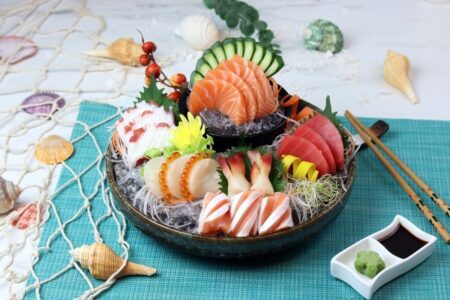
Take a moment before you eat. Sashimi is often plated carefully with garnishes like shredded daikon radish, shiso leaves, or edible flowers.
This isn’t just decoration. Presentation reflects freshness and respect for the ingredient.
2. Add Wasabi (But Don’t Overdo It)
A small amount of wasabi enhances flavor. Traditionally, you place a tiny dab directly on the fish rather than mixing it into soy sauce.
Too much wasabi can overpower delicate flavors. Start small. You can always add more.
3. Dip Lightly in Soy Sauce
When learning how to eat sashimi, this step makes a big difference.
Dip only the fish side lightly into soy sauce. Avoid soaking it. Too much soy sauce masks the natural taste of the seafood.
The goal is balance, not saturation.
4. Eat in One Bite
Sashimi slices are usually sized to be eaten in a single bite. This allows you to experience the full texture and flavor at once.
Chew slowly and notice:
Texture (buttery, firm, silky)
Flavor intensity
Natural sweetness
Clean finish
Sashimi is about subtlety.
5. Use Ginger as a Palate Cleanser
Pickled ginger is not meant to be eaten on top of sashimi. Instead, eat a small piece between different types of fish.
It resets your palate so you can taste each variety clearly.
Sashimi vs Sushi: Why It Matters
Understanding the difference helps you appreciate the eating method.
Sushi includes vinegared rice and often other ingredients. Sashimi contains only the fish.
Because there’s no rice to balance saltiness, it’s especially important not to oversaturate sashimi with soy sauce. The flavor profile is more delicate.
How to Tell If Sashimi Is Fresh
Freshness is critical when eating raw seafood.
According to the U.S. Food & Drug Administration, proper handling and freezing practices help reduce parasite risks in raw fish products. This is why sourcing and preparation standards matter when serving sashimi.
Here are signs of quality sashimi:
Bright, vibrant color
Clean, ocean-fresh smell (never fishy)
Firm texture that springs back
Smooth, glossy surface
If the fish smells strong or looks dull, it’s best to avoid it.
Is It Safe to Eat Raw Fish?
Many people hesitate the first time they try sashimi.
When handled properly, raw fish can be safe to eat. Regulatory guidelines require certain fish to be frozen at specific temperatures to eliminate parasites. Raw fish served as sashimi must follow strict freezing and handling standards, as outlined in Food and Drug Administration seafood safety guidance.
If you have a compromised immune system, are pregnant, or have specific medical concerns, consult a healthcare professional before consuming raw seafood.
Common Beginner Mistakes
If you’re learning how to eat sashimi, avoid these mistakes:
Mixing large amounts of wasabi into soy sauce
Drowning the fish in soy sauce
Placing ginger directly on top of the fish
Eating multiple pieces at once
Ignoring the order of different fish types
Start with lighter fish like white fish or scallops, then move to richer varieties like tuna or salmon.
The Flavor Experience: What to Expect
Sashimi may surprise you.
High-quality fish doesn’t taste “fishy.” Instead, you’ll notice:
Subtle sweetness
Clean ocean notes
Buttery texture in fatty cuts
Umami depth
Fatty fish used in sashimi contain omega-3 fatty acids, which the Harvard T.H. Chan School of Public Health highlights as beneficial for heart health.
Pairing Sashimi
To enhance your meal, consider simple pairings:
Green tea for a clean finish
Light sake for balanced flavor
Crisp white wine for contrast
Avoid overly sweet or heavily flavored drinks that overpower the fish.
FAQs
Do you eat sashimi with chopsticks or a fork?
Traditionally, chopsticks are used. However, using a fork is acceptable if you’re more comfortable. The most important thing is enjoying the experience respectfully.
Should you mix wasabi into soy sauce?
Traditionally, no. Place a small amount of wasabi directly on the fish. Mixing it into soy sauce is common outside Japan but not traditional etiquette.
Can you eat sashimi without soy sauce?
Yes. High-quality sashimi can be enjoyed without any sauce at all. Many purists prefer it this way.
What is the best fish for beginners?
Salmon and tuna are often recommended because of their mild flavor and smooth texture.
Curious to Try Sashimi Yourself?
Learning how to eat sashimi is less about strict rules and more about appreciating quality and balance. Use a light touch with soy sauce, add minimal wasabi, and take your time with each bite.
The beauty of sashimi lies in its simplicity. Once you understand the basics, you can focus on flavor, texture, and the experience itself.