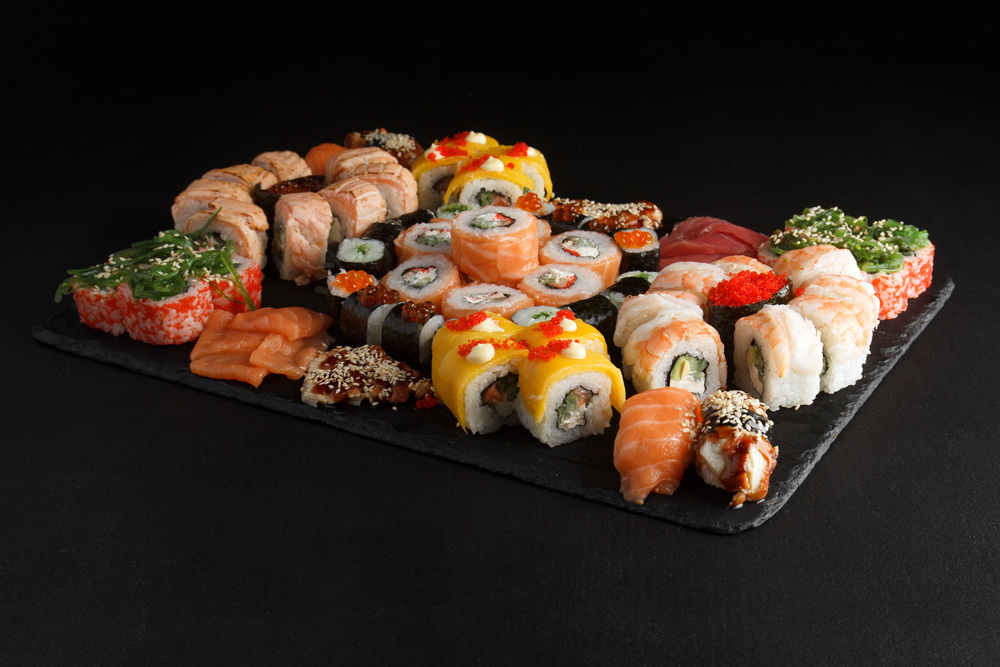
Ordering sushi is one thing. Knowing how to pair what is on the plate with everything around it is where the real depth of the experience lives. The rolls, the condiments, the drinks, and even the sequence in which you eat things all interact in ways that either sharpen or flatten the meal.
Sushi pairing is not a rigid discipline with rules that must be followed. It is a framework for understanding why certain combinations work and how to apply that understanding to your own preferences. Once you have it, every order becomes more intentional and every bite more satisfying.
What Sushi Pairing Actually Means
When most people think about pairing food, they think about wine. Sushi pairing covers a wider range than that. It includes how different rolls work alongside each other within the same order, how condiments interact with specific types of fish, how drinks complement or contrast with the flavors on the plate, and how the sequence of eating shapes the overall experience.
Flavor pairing in Japanese cuisine is rooted in the principle of balance. Rich flavors are offset by clean ones. Bold umami notes are softened by acidity. Delicate fish is not buried under heavy sauces. Every element at the table has a role, and sushi pairing is the practice of understanding those roles well enough to use them deliberately.
Pairing Rolls With Each Other
The order in which you eat different rolls matters more than most diners realize. Starting with a heavily sauced specialty roll and then moving to a simple piece of lean tuna nigiri will make the nigiri taste flat by comparison, not because the nigiri is poor quality, but because your palate has already been saturated with bold flavors.
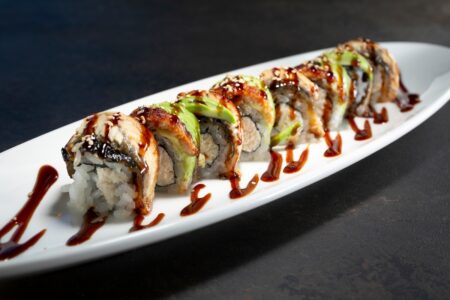
A strong sushi pairing approach for building an order follows a light-to-rich progression. Begin with the most delicate items, such as a thin cucumber hosomaki or a piece of flounder nigiri, and allow those flavors to establish a clean baseline. Then move through progressively richer options, building toward the most complex or sauce-heavy rolls at the end of the order.
This progression gives each item the best possible context in which to be appreciated and prevents any single roll from overshadowing the others.
How Condiments Function as Pairing Tools
Wasabi, soy sauce, and pickled ginger are not simply accompaniments placed on the plate out of habit. Each one serves a specific sushi pairing function.
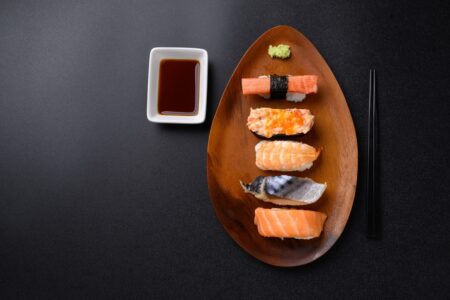
Wasabi adds heat and a sharp, sinus-clearing quality that cuts through fat. It works especially well alongside richer fish like salmon or fatty tuna because it provides contrast that refreshes the palate between bites. Using too much wasabi on a delicate white fish overwhelms the very subtlety you are eating that fish to experience.
Soy sauce provides salt and umami depth. It complements lean fish where a small boost of seasoning is beneficial, and works best applied lightly to the fish side of nigiri rather than used as a heavy dip. Tamari, a thicker and slightly richer soy variant, is sometimes offered and pairs particularly well with richer rolls where standard soy might feel too sharp.
Pickled ginger is the reset button. It is a palate cleanser designed to be eaten between different items rather than alongside them. Used correctly, it sharpens your ability to taste the next item freshly. Used incorrectly, it adds a competing flavor layer that muddies what follows.
Drinks and Sushi Pairing
The drink you choose alongside sushi either supports or competes with the flavors on the plate. A few pairing principles are worth keeping in mind.
Green tea is the classic accompaniment to Japanese dining for good reason. Its mild bitterness and subtle earthiness provide a neutral backdrop that cleanses the palate without competing with the fish. Hot green tea is particularly effective at refreshing the palate between rolls.
Sake works well with a range of sushi, particularly nigiri and sashimi. A dry, clean junmai sake pairs beautifully with delicate white fish because its restrained flavor does not overwhelm. A slightly richer nigori sake, which is cloudier and mildly sweet, pairs well with fattier cuts like salmon or toro.
Beer, particularly a light lager, is a popular and practical sushi pairing choice. Its carbonation acts as a palate cleanser between bites and the mild malt flavor sits comfortably alongside most rolls without pulling focus. Heavily hopped beers tend to clash with delicate fish flavors.
Still water is always the most neutral choice and allows the sushi to remain the focus. Sparkling water adds carbonation that refreshes the palate similarly to beer, making it a useful non-alcoholic pairing option for long orders.
Pairing by Fish Type
Different fish respond differently to the same condiments and accompaniments, which is why understanding sushi pairing at the ingredient level is more useful than following general rules.
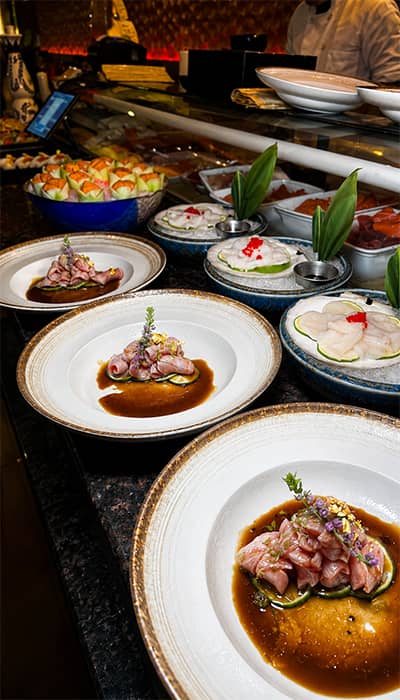
Lean white fish such as flounder or sea bass is best paired with minimal condiment interference. A light touch of citrus-based ponzu and nothing else allows the clean flavor to come through fully.
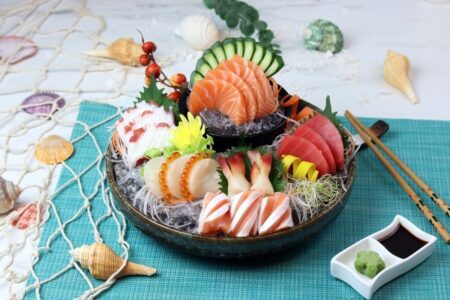
Rich, fatty fish such as salmon, toro, or yellowtail benefits from contrast. Wasabi, a small amount of citrus, or pickled daikon all work to cut through the fat and refresh the palate.
Shellfish like scallop or shrimp carries natural sweetness that pairs well with clean, lightly salted accompaniments. Heavy soy sauce dulls the sweetness. A drop of yuzu juice or a light ponzu enhances it.
Bold-flavored fish like mackerel, when served as shime-saba with its light vinegar cure, already carries its own acidity. It needs less condiment support than most other items and pairs best with a neutral drink that does not amplify the brininess.
The Role of Texture in Sushi Pairing
Flavor is not the only variable in sushi pairing. Texture plays an equally important role in how a full order feels across a meal.
A plate composed entirely of soft, rich items becomes monotonous regardless of how good each individual piece is. Introducing textural contrast, such as a crispy tempura roll alongside silky nigiri, or a crunchy cucumber hosomaki between heavier specialty rolls, keeps the palate engaged and makes the meal feel more dynamic from beginning to end.
This is one of the reasons a well-designed sushi order rarely focuses on a single type. The variety across formats, as discussed in our guide on types of sushi and how to order confidently, directly supports the kind of textural range that makes a full meal satisfying rather than one-dimensional.
FAQs
What drinks pair best with sushi?
Green tea, dry sake, and light lager are the most complementary drink choices for sushi. Each provides a palate-cleansing effect between bites without competing with the flavors of the fish. Still or sparkling water are reliable neutral options for non-alcoholic pairing.
Should wasabi be mixed into soy sauce?
Traditionally, wasabi is placed directly on the fish rather than dissolved into soy sauce. Mixing the two dilutes both elements and makes it harder to control how much heat you are adding to each piece. Using them separately gives you more precise control over the sushi pairing experience.
Does the order in which you eat sushi matter?
Yes. Eating lighter, more delicate items first and progressing toward richer or more heavily sauced rolls preserves the palate’s ability to appreciate each item. Reversing the sequence tends to make delicate flavors taste flat by comparison.
What is the purpose of pickled ginger with sushi?
Pickled ginger is a palate cleanser intended to be eaten between different sushi items rather than alongside them. It resets the palate so each item is tasted freshly and without the lingering influence of the previous one.
Does sushi pairing apply to non-alcoholic drinks?
Yes. Green tea, sparkling water, and citrus-based soft drinks can all function as effective sushi pairing choices. The key quality to look for in a non-alcoholic pairing is something that refreshes the palate without adding a flavor that competes with the fish.
The Right Pairing Makes the Whole Meal
Sushi pairing is not about following a checklist. It is about paying attention to how the elements at your table relate to each other and making small, informed choices that let each item perform at its best. The condiment you reach for, the drink you pour, and the order you eat things in all shape the experience in ways that compound across a full meal.
The more deliberately you approach those choices, the more rewarding every order becomes. If you want to explore how these principles translate to the plate in person, take a look at what a sushi restaurant committed to quality and craft looks like, and come experience it for yourself.