- Masuta Japanese Fusion Restaurant
- October 18, 2026
- 13 min read
SASHIMI
Table of Contents
- 1. Why Are Garnishes an Important Part of Sashimi?
- 2. What Are Traditional Sashimi Garnishes?
- 3. Why Is Shredded Daikon Served with Sashimi?
- 4. What Role Do Shiso Leaves Play on a Sashimi Plate?
- 5. Why Are Wasabi and Other Accompaniments Included?
- 6. How Do Garnishes Complement Different Types of Fish?
- 7. How Does Japanese Sashimi Presentation Use Color and Balance?
- 8. What Is the Cultural Significance of Sashimi Garnishes?
- 9. Are the Garnishes Served with Sashimi Meant to Be Eaten?
- 10. How Can You Appreciate the Garnishes on Your Plate?
- 11. Frequently Asked Questions
Have you ever ordered sashimi and wondered why the slices of fish arrive resting on a little mountain of shredded white vegetables, surrounded by green leaves and carefully arranged accompaniments? Those ingredients are not simply there to make the plate look attractive.
Sashimi Garnishes are part of a thoughtful approach to serving raw fish. They introduce contrasting colors, provide different textures, and give you opportunities to experience the fish alongside complementary flavors.
Some are intended to be enjoyed between bites, while others can be paired with individual slices according to your preference.
Understanding what these ingredients contribute can make your next sashimi experience more interesting. From shredded daikon and shiso leaves to wasabi and seasonal vegetables, each accompaniment has a place in the presentation.
1. Why Are Garnishes an Important Part of Sashimi?
Sashimi may appear simple because it typically features carefully sliced seafood served without rice. However, the experience involves more than the fish alone.
Every element on the plate contributes to how you perceive the dish. A crisp vegetable can introduce a different texture, a fragrant leaf can add an herbal note, and a small amount of wasabi can change the way you experience an individual bite.
The presentation also helps distinguish the different ingredients. Instead of placing every slice directly beside another, garnishes can create visual separation and make the arrangement easier to appreciate.
This attention to detail is also worth considering when learning what contributes to a thoughtful sashimi dining experience. The accompaniments are one part of a broader approach that includes ingredient selection, preparation, and presentation.
You do not have to eat every garnish to appreciate its contribution. Simply understanding why it is there can change the way you look at your plate.
2. What Are Traditional Sashimi Garnishes?
Traditional sashimi garnishes include several ingredients with different flavors, textures, and visual characteristics. The exact selection varies depending on the fish, the season, and the intended presentation.
Common examples include:
Shredded daikon: Thinly cut white radish that provides a crisp texture and mild, slightly peppery flavor.
Shiso leaves: Aromatic green leaves with a distinctive herbal character.
Wasabi: A pungent accompaniment commonly enjoyed in small amounts with sashimi.
Myoga: Japanese ginger buds with a fragrant, mildly sharp flavor.
Seasonal vegetables: Ingredients selected for their color, texture, or relationship to the overall arrangement.
Not every sashimi platter includes all these ingredients. A simpler presentation might use daikon, shiso, and wasabi, while another may incorporate additional seasonal details.
The Japan National Tourism Organization (JNTO) discusses the importance of seasonality and thoughtful presentation in Japanese cuisine. This broader culinary approach helps explain why even small accompaniments can receive careful attention.
Rather than treating garnishes as unnecessary decoration, it is useful to think of them as supporting ingredients that help complete the dish.
3. Why Is Shredded Daikon Served with Sashimi?
If you have noticed a nest of thin white strands beneath your sashimi, you are probably looking at daikon radish.
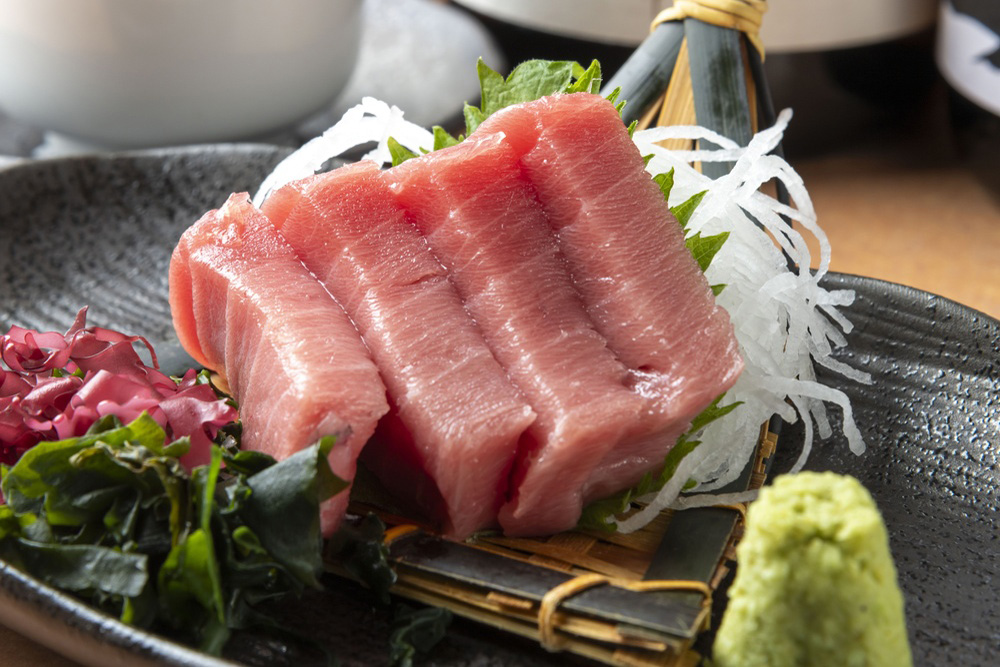
Shredded daikon with sashimi is one of the most recognizable examples of traditional Japanese plating. Its mild flavor and crisp texture provide a contrast to the softer consistency of many raw fish varieties.
The fine strands are often called ken, a style of thinly shredded vegetable used in Japanese food presentation. Daikon prepared this way may also be discussed within the broader category of tsuma, a term associated with sashimi accompaniments.
There are several reasons this combination works.
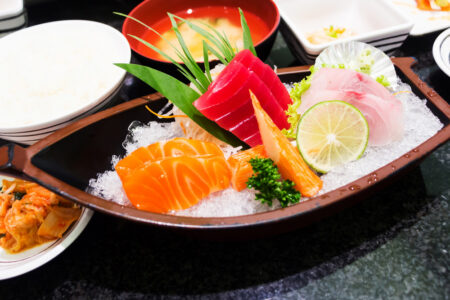
First, the white strands create a neutral background that allows the natural colors of the fish to stand out. Deep red tuna, pale white fish, and orange salmon become more visually distinct against the daikon.
Second, daikon adds a refreshing crunch. If you enjoy a few strands between pieces of fish, you may notice how the change in texture makes each bite feel different.
Finally, the arrangement gives the plate height and structure. Instead of presenting every ingredient flat against the serving surface, the shredded vegetable helps create a more deliberate composition.
Daikon is edible, but its presence does not mean you must finish the entire portion.
4. What Role Do Shiso Leaves Play on a Sashimi Plate?
Shiso leaves are another familiar sight in sashimi plating. Their textured green surface and distinctive shape make them easy to recognize.
Unlike shredded daikon, which has a relatively mild taste, shiso contributes a more noticeable aroma. Depending on the variety, its flavor may remind you of mint, basil, or other fresh herbs, although shiso has its own distinct character.
A leaf can serve several purposes on the plate.
It may provide a visual contrast behind the fish, create separation between ingredients, or introduce a fresh herbal note when eaten with a slice.
You might enjoy shiso with a richer piece of fish because its aromatic character offers a different flavor experience. Alternatively, you may prefer to eat it separately rather than combine everything in one bite.
Neither approach is a universal requirement.
The important distinction is that shiso is more than a green background. It is an edible ingredient that can contribute both aroma and flavor.
5. Why Are Wasabi and Other Accompaniments Included?
Wasabi is commonly served with sashimi because its pungency creates a contrast with the fish’s natural flavor.
However, the amount you use matters.
Adding a large portion can overwhelm a delicate slice, making it harder to notice the ingredient’s subtler characteristics. Starting with a small amount allows you to decide whether you prefer more.
You may also encounter soy sauce alongside the fish. Its salty, savory character can complement sashimi, but it does not need to dominate every bite.
Some presentations include grated ginger, citrus, or other seasonings selected to accompany particular ingredients.
The purpose of these additions is not necessarily to make every slice taste the same. Instead, they offer different ways to experience the fish.
For example, you might enjoy one piece without any seasoning before trying another with a little wasabi or soy sauce. Comparing the two can help you identify which combination you prefer.
It is also important to understand that wasabi, ginger, and other condiments do not make improperly handled raw seafood safe to eat. Appropriate sourcing, storage, and food handling remain essential.
6. How Do Garnishes Complement Different Types of Fish?
Not every type of sashimi has the same flavor or texture.
Some fish have a mild, delicate taste, while others offer a richer mouthfeel or more pronounced flavor. The accompaniments can be adjusted to complement those differences.
A thin slice of white fish, for instance, may be enjoyed with a restrained amount of seasoning so its subtle character remains noticeable. A richer slice may pair pleasantly with something crisp or aromatic.
Shredded vegetables introduce texture without requiring a heavy sauce. Shiso adds fragrance, while a small amount of wasabi creates a sharper contrast.
These combinations are preferences rather than fixed rules.
The ingredients themselves also reflect a larger culinary story. If you are interested in how seafood traditions developed, exploring the relationship between fishing practices and Japanese food culture provides useful background.
When enjoying your own plate, try noticing the fish’s natural taste first. You can then experiment with a small portion of an accompaniment and decide whether the combination adds something you enjoy.
7. How Does Japanese Sashimi Presentation Use Color and Balance?
Japanese sashimi presentation often emphasizes the natural appearance of individual ingredients rather than hiding them beneath elaborate sauces.
Consider the colors of a typical arrangement.
White daikon creates a clean background, green shiso introduces contrast, and the fish supplies its own shades of red, pink, orange, or ivory.
The arrangement may also incorporate height, spacing, and different shapes. These details help the individual components remain visually distinct.
Balance does not necessarily mean symmetry. A carefully arranged platter can have more height on one side or use an uneven number of elements while still appearing cohesive.
The goal is to let you appreciate the ingredients without making the presentation feel crowded.
You can explore another example of how sashimi preparation and presentation come together to understand how these details contribute to the overall dining experience.
Next time you see a sashimi platter, notice where your eyes naturally go first. The garnishes may be helping direct your attention toward the fish.
8. What Is the Cultural Significance of Sashimi Garnishes?
The attention given to sashimi accompaniments connects with broader Japanese culinary traditions, particularly the appreciation of seasonal ingredients and thoughtful presentation.
In this context, food is not only about taste. Its appearance, texture, aroma, and relationship to the season can all contribute to the experience.
A garnish might introduce a seasonal color or provide a contrast that makes the main ingredient more noticeable.
This does not mean every arrangement carries a specific symbolic message. Sometimes an ingredient is selected for practical reasons, flavor compatibility, or visual appeal.
Still, the broader approach encourages diners to notice details that might otherwise be overlooked.
A carefully prepared vegetable, an aromatic leaf, or a restrained portion of seasoning can reflect the same attention given to the central ingredient.
When you understand this, the garnishes become easier to appreciate as intentional parts of the meal rather than items that happen to occupy empty space on the plate.
9. Are the Garnishes Served with Sashimi Meant to Be Eaten?
This is one of the most common questions people have when encountering an unfamiliar sashimi arrangement.
Many traditional accompaniments, including shredded daikon and shiso leaves, are edible. However, whether you choose to eat them depends on your preferences and the particular presentation.
You can enjoy daikon between bites for a crisp change in texture. Shiso may be eaten separately or paired with fish if you enjoy its herbal flavor.
Other decorative elements may not be intended for consumption. If you are unsure about a particular leaf, flower, or ornament, it is sensible to ask before eating it.
The Ministry of Agriculture, Forestry and Fisheries of Japan (MAFF) provides broader educational material on Japanese food culture and culinary traditions. Understanding this wider context can help you appreciate why ingredient selection and presentation receive attention.
One additional point is worth remembering: edible garnishes are not substitutes for proper food safety practices. Their presence should never be interpreted as proof that raw seafood is safe.
10. How Can You Appreciate the Garnishes on Your Plate?
You do not need specialized knowledge to enjoy sashimi more thoughtfully. A little curiosity is enough.
When your plate arrives, begin by looking at the arrangement before adding any seasoning. Notice the different colors, the placement of the fish, and how the vegetables and leaves contribute to the presentation.
Then consider tasting an individual slice without accompaniments. This gives you an opportunity to experience its natural texture and flavor.
For the next piece, you might try a small amount of wasabi or enjoy a few strands of daikon between bites.
Pay attention to whether the combination changes your experience. Does the vegetable add a pleasant crunch? Does the shiso introduce a flavor you enjoy? Would you prefer less seasoning?
There is no need to combine every ingredient at once.
A few common habits are worth avoiding:
Adding so much wasabi or soy sauce that you can no longer appreciate the fish’s natural flavor.
Assuming every decorative element is edible without identifying it.
Treating the accompaniments as mandatory rather than exploring them according to your preferences.
The more you notice these small details, the easier it becomes to understand why sashimi presentation involves more than simply placing sliced fish on a plate.
11. Frequently Asked Questions
What is the white shredded vegetable served under sashimi?
It is usually daikon radish, cut into very thin strands. This preparation creates a crisp accompaniment and provides a light-colored background that helps the fish stand out visually.
The strands are commonly associated with ken, a style of finely shredded vegetable used in sashimi presentation.
Can you eat the shredded daikon served with sashimi?
Yes. Shredded daikon is edible and can be enjoyed alongside the fish or between bites.
Its mild flavor and crunchy texture offer a contrast to the softer consistency of sashimi. You can eat as much or as little as you prefer.
Why are shiso leaves included on sashimi platters?
Shiso leaves contribute color, aroma, and an herbal flavor. They can also help visually separate ingredients within the arrangement.
Some diners enjoy eating shiso with sashimi, while others prefer it separately.
Is wasabi considered a garnish or a condiment?
Wasabi is generally considered a condiment because it is added to influence the flavor of the fish.
However, it also contributes to the overall presentation when served neatly alongside other traditional sashimi garnishes.
Do all sashimi platters use the same garnishes?
No. The selection can vary according to the ingredients, preparation style, season, and intended presentation.
Some platters feature simple combinations of daikon, shiso, and wasabi, while others incorporate additional vegetables or seasonal accompaniments.
The important consideration is how the accompanying ingredients work with the fish rather than how many garnishes appear on the plate.
Key Takeaways
Shredded daikon, shiso leaves, wasabi, and other sashimi accompaniments each contribute something different to the dining experience.
Daikon introduces a mild flavor and crisp texture while creating a contrasting background for the fish. Shiso adds color and aroma, and wasabi offers an optional pungent complement.
Together, these ingredients demonstrate how presentation, texture, and flavor can work alongside the central ingredient without overwhelming it.
The next time you enjoy sashimi, take a moment to notice the garnishes before setting them aside. You may discover that something you previously considered decoration adds an enjoyable new dimension to your meal.
Appreciating Sashimi Beyond the Fish
Understanding why garnishes accompany sashimi gives you another way to appreciate the care behind its preparation.
You do not need to follow a strict tasting routine or eat every ingredient. Simply observing the presentation and experimenting with different accompaniments can help you discover combinations that suit your preferences.
Curious to explore more Japanese dishes and the ingredients that accompany them? Browse the Masuta Japanese Restaurant menu to discover the available selections.
DISCLAIMER: This article is intended for general educational purposes and is not a substitute for professional food safety or medical advice.
Consuming raw or undercooked seafood carries a risk of foodborne illness. Pregnant individuals, older adults, young children, people with weakened immune systems, and others at increased risk of severe foodborne illness should follow applicable public health guidance and consult a qualified healthcare professional when appropriate.
Garnishes and condiments do not eliminate the risks associated with improperly sourced, stored, or handled raw seafood.