Thinking about ordering a sashimi platter but not sure what you’re getting into? You’re not alone. For many diners, a sashimi platter looks beautiful but feels like a mystery. What fish is that? How is it cut? Why does it taste so different from sushi?
This guide breaks it all down. By the time you finish reading, you’ll know exactly what’s on a sashimi platter, how each fish tastes, and what separates a great platter from an average one.
What Is a Sashimi Platter?
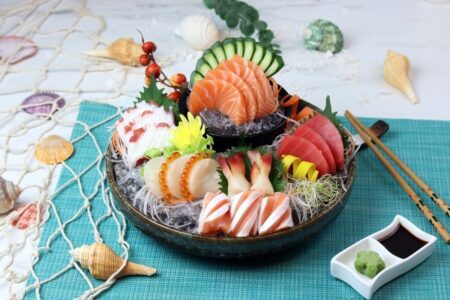
A sashimi platter is a curated selection of thinly sliced raw fish, served without rice. Unlike sushi rolls or nigiri, sashimi is all about the fish itself. There are no distractions — no sauces, no fillings, no rice to mask the flavor. Just clean, precise cuts of the freshest fish available.
Most platters include three to six varieties of fish, arranged by flavor profile from lightest to richest. A typical serving contains two to three slices per fish type, though this varies by restaurant and platter size.
The simplicity is the point. When a sashimi platter is done right, every slice speaks for itself.
The Most Common Fish on a Sashimi Platter
Not all sashimi platters are identical, but certain fish appear consistently across Japanese menus. Here is what you are most likely to find and what to expect from each one.
Tuna (Maguro)
Tuna is the centerpiece of most sashimi platters. It has a deep red color, a firm texture, and a clean, mildly savory flavor. It is approachable for first-timers and beloved by regulars alike.
You may also see premium tuna labeled as otoro or chutoro. These cuts come from the fatty belly of the fish and have a richer, buttery taste that melts on the tongue. They are considered some of the most prized cuts in Japanese cuisine.
Salmon (Sake)
Salmon is one of the most popular choices on any sashimi platter. Its bright orange color, soft texture, and naturally rich flavor make it an easy crowd-pleaser. It has a slightly sweet, buttery finish that pairs well with a small dab of wasabi.
According to the Seafood Health Facts resource developed by Sea Grant and NOAA, salmon is also one of the highest sources of omega-3 fatty acids among commonly consumed fish, making it as nutritious as it is delicious.
Yellowtail (Hamachi)
Yellowtail sits between tuna and salmon in terms of flavor intensity. It has a smooth, slightly sweet taste with a firm but tender bite. Many diners consider it a favorite once they try it. It pairs particularly well with a thin slice of jalapeño and a touch of ponzu, though traditional presentations keep it simple.
Fluke or Flounder (Hirame)
Fluke is a white fish with a delicate, mild flavor. It is often served with a light citrus-based sauce or just a touch of salt. If you prefer lighter flavors, this is the cut to seek out on the platter. Its subtle taste makes it an excellent palate cleanser between richer fish.
Octopus (Tako)
Octopus sashimi has a firm, slightly chewy texture and a mild, clean flavor. It is typically boiled before slicing, which technically makes it one of the few cooked options you may find on a sashimi platter. It is a great option for diners who are cautious about eating fully raw fish.
Sea Bass (Suzuki)
Sea bass offers a clean, light flavor with a silky texture. It is a popular choice among diners who enjoy white fish but want something with slightly more depth than fluke. It is often served with a thin slice of citrus on top.
How Sashimi Is Cut and Why It Matters
The knife cut is one of the most important factors in sashimi quality. A proper cut affects both the texture and the flavor of the fish. This is why trained sushi chefs spend years mastering their knife technique before serving sashimi to guests.
According to the Tasting Table’s overview of sashimi knife cuts, the three most common cuts are:
Hira-zukuri is the most standard cut. The fish is sliced straight down into thick, rectangular pieces. This works well for firm fish like tuna and salmon and gives each piece a substantial, satisfying bite.
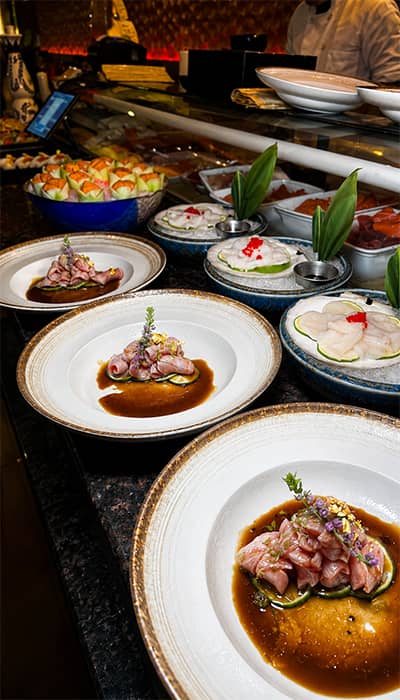
Sogi-zukuri is a thinner, angled cut used for more delicate fish like fluke or sea bass. The diagonal slice increases the surface area, which enhances the flavor and gives the fish a more elegant appearance on the plate.
Usu-zukuri is the thinnest cut of all, sliced almost transparently. It is typically reserved for very delicate white fish and is considered a showcase of the chef’s knife skills.
The thickness and angle of each cut change how the fish feels in your mouth. A properly cut piece of sashimi has a clean finish. A poorly cut piece can feel stringy or tough, even if the fish itself is fresh.
What Comes with a Sashimi Platter?
A sashimi platter is typically accompanied by a few traditional garnishes and condiments. These are not just decorative — each one serves a purpose.
Wasabi is served alongside sashimi to enhance the fish’s natural flavor. A small amount applied directly to the fish is the traditional method. Mixing it into your soy sauce is acceptable but considered less refined in Japanese dining culture.
Soy sauce is used sparingly. The goal is to complement the fish, not overpower it. Dip lightly rather than soaking each piece.
Pickled ginger (gari) is a palate cleanser. It is meant to be eaten between different fish varieties to reset your taste buds, not eaten alongside the sashimi itself.
Shredded daikon radish is often used as a bed for the fish. It keeps the sashimi cool, adds a mild crunch, and helps separate flavors visually and texturally on the plate.
Sashimi vs. Nigiri: What Is the Difference?
This is one of the most common questions diners have. The short answer is that nigiri includes rice and sashimi does not.
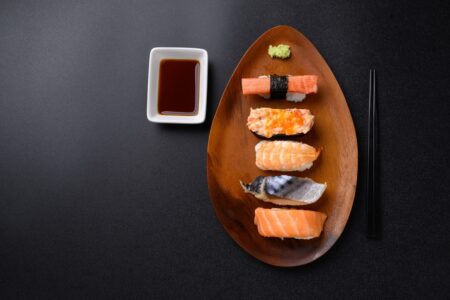
Nigiri is a hand-pressed mound of vinegared rice with a slice of fish placed on top. Sashimi is just the fish, sliced and served on its own. Both highlight the quality of the fish, but sashimi puts the fish front and center with nothing else to fall back on.
If you are trying a particular fish for the first time, sashimi is actually the better way to experience it in its purest form.
How to Order a Sashimi Platter
If it is your first time ordering, here are a few practical tips to keep in mind.
- Start with a mixed platter rather than ordering individual pieces. This gives you a range of flavors and helps you identify what you enjoy most.
- Tell your server if you have any allergies or strong preferences. Most restaurants will accommodate substitutions.
- Order lighter fish first and work your way toward richer cuts. Tuna and salmon are great starting points.
- Do not feel pressured to eat everything in a specific order. Sashimi is meant to be enjoyed at your own pace.
- Ask about the daily fish selection. The best sashimi restaurants rotate their offerings based on what is freshest that day.
Is Sashimi Safe to Eat?
Raw fish is safe to eat when it is handled and stored correctly. Reputable Japanese restaurants source sushi-grade fish that meets strict quality and safety standards. The FDA provides guidelines on the safe handling and preparation of raw fish for consumers and food service establishments.
If you are pregnant, immunocompromised, or have specific dietary concerns, consult your doctor before eating raw fish. When in doubt, octopus and certain other options on the platter are cooked and offer a lower-risk alternative.
FAQs
What fish is typically on a sashimi platter?
The most common fish on a sashimi platter include tuna, salmon, yellowtail, fluke, octopus, and sea bass. The exact selection varies by restaurant and seasonal availability.
How many pieces come on a sashimi platter?
Most sashimi platters include two to three slices per fish variety. A standard mixed platter typically contains between 9 and 15 pieces total, depending on the size you order.
Is sashimi the same as sushi?
No. Sashimi is sliced raw fish served without rice. Sushi refers to dishes made with vinegared rice, which may or may not include raw fish.
Do I need to use soy sauce with sashimi?
It is optional. Many purists prefer sashimi with just a small amount of wasabi to let the natural flavor of the fish come through. If you use soy sauce, dip lightly so it does not overpower the fish.
What is the difference between otoro and regular tuna sashimi?
Regular tuna sashimi, called maguro, comes from the leaner parts of the fish. Otoro comes from the fatty belly and has a much richer, buttery flavor. It is considered a premium cut and is typically priced higher on the menu.
Can beginners enjoy a sashimi platter?
Absolutely. Starting with a mixed platter that includes salmon and tuna is the easiest entry point. Both are mild, approachable, and widely enjoyed by first-time sashimi diners.
Ready to Try a Sashimi Platter?
A sashimi platter is one of the most rewarding ways to experience Japanese cuisine. Once you understand what you are looking at, what each fish tastes like, and how the cuts affect the experience, every order becomes more intentional and more enjoyable.
Whether you are a first-time diner working up the courage to try raw fish or a regular who wants to deepen your appreciation for what is on the plate, the sashimi platter is always worth exploring.
The next time you sit down at a Japanese restaurant, skip the guesswork. Use this guide, trust the chef’s selection, and let the fish do the talking.
Curious about what else is on the menu? Browse our full menu and discover fresh Japanese dishes prepared daily.
Disclaimer
The information in this post is for general educational purposes only and does not constitute medical or dietary advice. Please consult a qualified healthcare professional if you have specific health concerns related to consuming raw fish.