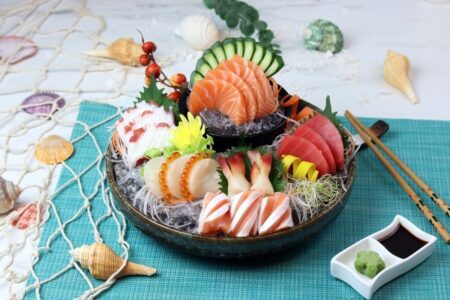
Salmon and tuna are the workhorses of the sashimi menu. They are familiar, reliable, and almost universally liked. For a diner new to raw fish, they are a perfectly sensible place to begin.
But if salmon and tuna are the only sashimi cuts you ever order, you are missing some of the most rewarding flavors on the entire menu.
Japanese cuisine has a long tradition of finding exceptional quality in cuts that Western diners routinely overlook. Some of the most texturally interesting and deeply flavored sashimi cuts are the ones that get passed over in favor of the familiar. This guide is an introduction to what you have been skipping. If you are newer to ordering raw fish, our complete beginner’s guide to eating sashimi is worth reading first.
Why Diners Default to Salmon and Tuna
There is nothing wrong with salmon and tuna. Both are genuinely excellent when sourced well and cut with care. Salmon has a rich, buttery fat content that makes it immediately approachable, while tuna offers a clean, lean flavor that pairs easily with soy and wasabi. They are also visually recognizable, which makes them comfortable choices for anyone uncertain about what they are ordering.
The issue is not with those fish. It is with the habit of never going further. Japanese sashimi culture is built on the idea that different fish, different seasons, and different cuts each carry their own distinct character. Treating the sashimi menu as a list with only two viable options ignores most of what makes the experience interesting. For a closer look at what elevates sashimi beyond the familiar, explore what makes authentic sashimi a true dining experience.
Hamachi (Yellowtail): The Gateway Beyond the Familiar
For diners ready to take one step past salmon and tuna, hamachi is the natural starting point. Yellowtail sits between the fattiness of salmon and the leanness of tuna, with a mild, slightly sweet flavor and a silky texture that makes it one of the most consistently enjoyable sashimi cuts available.
It is widely available, highly versatile, and beloved in Japan for good reason. If you have never ordered it, hamachi is the sashimi cut most likely to become a new regular on your list.
Hotate (Scallop): Sweetness in Every Slice
Scallop sashimi is one of the most underappreciated sashimi cuts in a Western dining context. When sourced fresh, hotate is remarkably sweet, with a soft, yielding texture that differs entirely from tuna or yellowtail. It has a clean ocean flavor without any of the brininess that some diners associate with raw seafood.
Scallop sashimi is typically sliced thin or served in rounds depending on the size of the scallop, and it pairs beautifully with a small amount of citrus-based ponzu. For diners who enjoy subtle, delicate flavors over bold ones, hotate is one of the most rewarding sashimi cuts to explore.
Hirame (Flounder): Lean, Delicate, and Deeply Underrated
Hirame is a white-fleshed flatfish with a very mild, clean flavor and a firm yet tender texture. It is one of the sashimi cuts most prized by chefs in Japan, where its subtlety is treated as a virtue rather than a limitation.
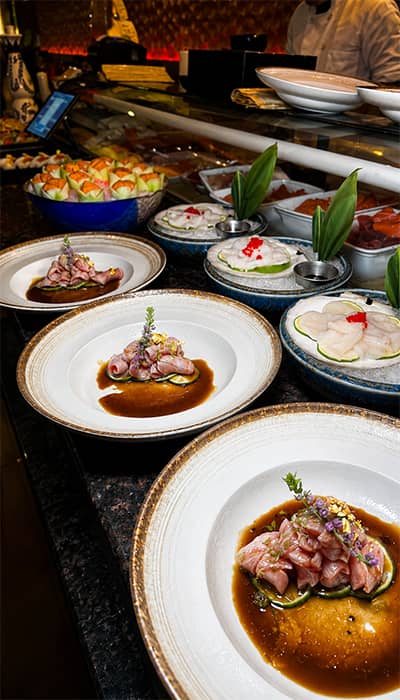
Because hirame has such a restrained flavor profile, it rewards quality ingredients and precise knife work more than almost any other fish on the menu. A thin, diagonal slice of fresh hirame, eaten with minimal condiment interference, is a study in the elegance of simplicity. Diners who describe sashimi as too strong in flavor will often find hirame to be a revelation.
Ika (Squid): Texture Unlike Anything Else
Squid sashimi is one of the most texturally distinctive sashimi cuts available, and it is consistently underordered by diners unfamiliar with it. Raw ika has a firm, slightly chewy bite that is nothing like cooked calamari. The flavor is mild and clean, with a gentle sweetness.
Squid prepared for sashimi is typically scored lightly on the surface before slicing, which both improves the texture and allows it to hold condiments more effectively. If you have only ever had squid fried or in a stew, ika sashimi will read as an entirely different ingredient.
Saba (Mackerel): Bold, Briny, and Often Overlooked
Mackerel is a polarizing sashimi cut, and it is polarizing for the same reason it is interesting. Saba has a stronger, more pronounced flavor than most other sashimi fish. It is oily, briny, and assertive in a way that salmon and tuna are not.
Saba is often cured lightly in salt and vinegar before serving, a preparation known as shime-saba, which tempers the intensity of the fish and adds a slight tang. For diners who enjoy bold flavors and want something genuinely different on the plate, saba is one of the most memorable sashimi cuts available.
Toro (Fatty Tuna): A Cut Apart
Toro deserves its own mention even though it comes from the same fish as the maguro most diners know. Toro refers specifically to the fatty belly section of bluefin tuna, and it is categorically different in both flavor and texture from standard tuna sashimi cuts.
There are two grades. Chutoro is medium-fatty, with a balance of the lean tuna flavor and the silky richness of fat running through the flesh. Otoro is the fattiest section, with a texture that borders on buttery and a flavor so rich that a single piece is often its own complete experience.
Toro commands a higher price on most menus, and that price is generally justified. If you have only ever ordered standard tuna, trying chutoro or otoro at least once reframes the entire category.
How to Build a More Interesting Sashimi Order
Ordering across a range of sashimi cuts rather than defaulting to the familiar is simple in practice. A useful approach is to anchor the order with one known favorite, add one unfamiliar cut from the list above, and let that guide future visits. Over time, the instinct to default narrows, and the menu opens up.
Asking the server or chef what is freshest that day is also worth doing. Sashimi quality is seasonal and supply-dependent, and the best cut on any given visit may be something you would not have considered ordering on your own.
FAQs
What are the most popular sashimi cuts?
Salmon (sake) and tuna (maguro) are the most commonly ordered sashimi cuts in Western restaurants. Beyond those, yellowtail (hamachi), scallop (hotate), flounder (hirame), and squid (ika) are widely available and worth exploring.
What is the difference between toro and regular tuna sashimi?
Regular tuna sashimi, typically maguro, comes from the leaner sections of the fish. Toro refers to the fatty belly cuts, which are significantly richer in fat content and have a softer, more buttery texture. Chutoro is medium-fatty and otoro is the most indulgent grade.
Is squid sashimi chewy?
Raw squid sashimi has a firm, slightly chewy texture that differs entirely from cooked calamari. It is typically scored before slicing to improve texture and make it easier to eat. The flavor is mild and clean with a subtle sweetness.
Which sashimi cuts are best for first-time diners?
Salmon and yellowtail (hamachi) are the most approachable sashimi cuts for first-time diners due to their mild, slightly rich flavor profiles. Scallop (hotate) is also a gentle introduction for those who prefer subtle, sweet flavors.
Are all sashimi cuts served raw?
Most sashimi cuts are served completely raw. Some, such as shrimp (ebi), are occasionally served lightly cooked or blanched. Mackerel (saba) is often lightly cured in salt and vinegar before serving, which is a traditional preparation rather than a fully raw presentation.
Curious About What Else Is on the Plate?
Salmon and tuna will always have a place on the plate. They earned their popularity for good reason. But the sashimi menu has far more to offer than those two cuts alone, and the diners who venture past the familiar consistently find that some of their most memorable bites come from fish they almost did not order.
Hamachi, hotate, hirame, ika, saba, toro. Each one brings something distinct to the table that salmon and tuna simply cannot replicate. The next time you sit down with a sashimi menu in hand, consider it an open invitation rather than a routine checklist. The most interesting cut on the menu might be the one you have been overlooking.
Disclaimer
Consuming raw or undercooked seafood carries food safety risks. Always ensure sashimi is sourced from a kitchen that follows proper food safety handling protocols. Individuals who are pregnant, elderly, immunocompromised, or have underlying health conditions should consult a healthcare provider before consuming raw seafood.