You’ve seen it on the menu, and maybe on the plate next to you, a roll with thin slices of avocado fanned across the top like scales. If you have ever asked yourself what is a dragon roll, the short answer is this: it’s a fully cooked specialty roll built around shrimp tempura, avocado, and a sweet drizzle of eel sauce. This guide breaks down exactly what’s inside, how it’s made, and what to expect the first time you order one at Masuta.
1. What Is a Dragon Roll?
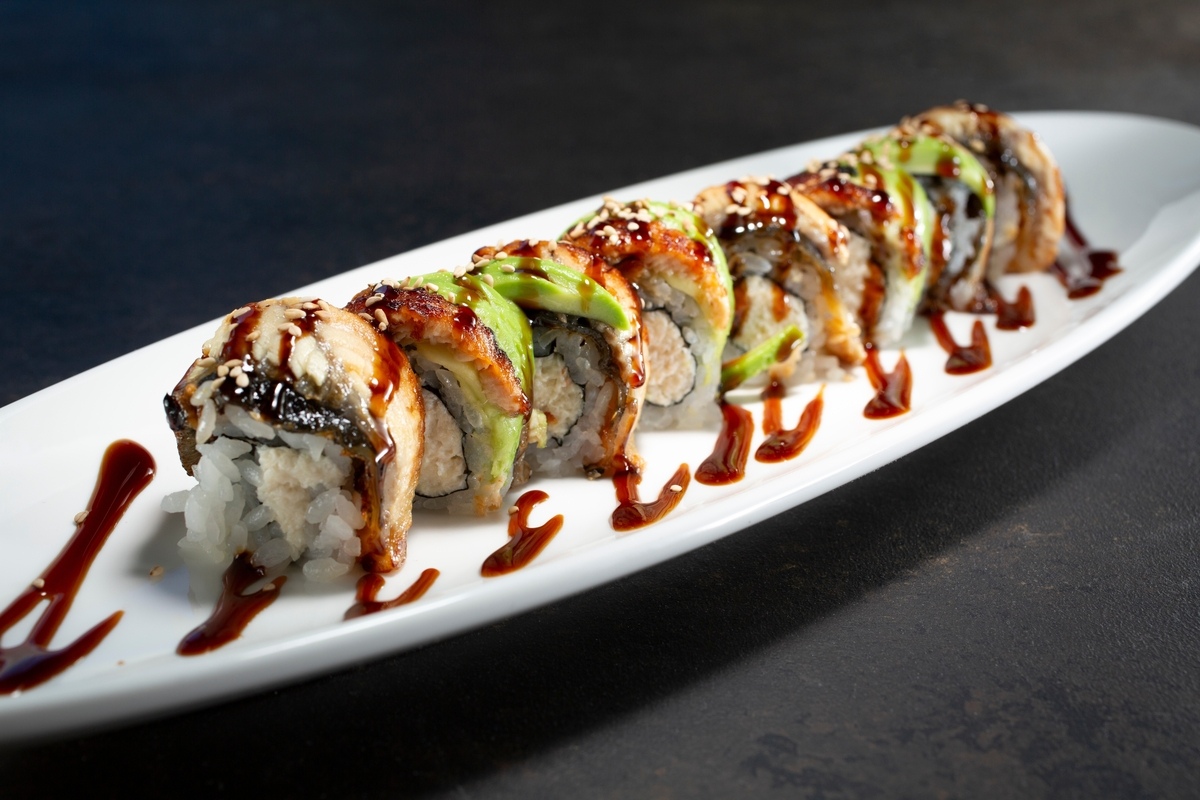
A dragon roll is a specialty sushi roll built as an uramaki, meaning the rice sits on the outside of the roll instead of the seaweed. Inside, you will typically find shrimp tempura and cucumber, rolled tightly and topped with thin, fanned slices of avocado that create the roll’s signature “dragon scale” look.
Unlike many rolls on a sushi menu, a dragon roll contains no raw fish. The shrimp is battered and fried before it goes into the roll, which makes this one of the most approachable options for someone who is still deciding how they feel about raw seafood. The name comes entirely from its appearance, not from any specific ingredient tied to a dragon.
Because it is a Western-style creation rather than a traditional Japanese dish, you will find some variation from restaurant to restaurant. The core idea, tempura shrimp wrapped in rice with a dramatic avocado topping, stays consistent almost everywhere you order one. For a broader look at how rolls like this compare to nigiri and sashimi, our types of sushi guide breaks down every format on the menu.
2. What's Inside a Dragon Roll at Masuta
The ingredients in a dragon roll are straightforward, but each one plays a specific role in the finished dish. Understanding what is a dragon roll made of makes it easier to know what you are ordering before it arrives at the table.
Core ingredients:
- Shrimp tempura (battered and fried shrimp, fully cooked)
- Cucumber, cut into thin strips for crunch
- Sushi rice, seasoned with rice vinegar
- Nori (seaweed), rolled on the inside
- Avocado, thinly sliced and layered across the top
- Eel sauce, a sweet soy-based glaze drizzled over the finished roll
Some versions add tobiko, sesame seeds, or a touch of spicy mayo for extra flavor and texture. If you have a preference, most kitchens can adjust the toppings without changing the core roll underneath.
3. How a Dragon Roll Is Made
Building a dragon roll starts the same way most uramaki rolls do. The chef lays a sheet of nori on the rolling mat, spreads seasoned sushi rice evenly across it, then flips the sheet so the rice faces outward and the nori is rolled on the inside.
The basic process:
- Spread seasoned rice over a sheet of nori and flip it rice-side out
- Layer the shrimp tempura and cucumber along the center
- Roll tightly using a bamboo mat to hold the shape
- Slice the roll into pieces
- Fan thin avocado slices across the top of each piece
- Finish with a drizzle of eel sauce and any additional toppings
The avocado topping is what separates a dragon roll from a simpler tempura roll. Slicing it thin enough to fan out across the top takes a steady hand, which is part of why the roll has such a distinct, layered look on the plate.
4. What Does a Dragon Roll Taste Like?
A dragon roll balances several textures and flavors in a single bite. The shrimp tempura brings a warm, crispy center, while the cucumber adds a cool, crunchy contrast. The rice ties everything together with a light tang from the rice vinegar.
The avocado on top is where the roll gets its richness. Its mild, buttery flavor softens the crunch of the tempura underneath, and the eel sauce adds a final layer of sweetness that brings the whole roll together. It is a roll built for people who enjoy a mix of textures in every bite, rather than one dominant flavor.
If you prefer a spicier finish, ask for a side of spicy mayo. It pairs well with the sweetness of the eel sauce without overwhelming the roll.
5. Dragon Roll vs. Similar Rolls
Dragon rolls are often confused with a few other visually similar rolls, so it helps to know the difference before you order.
How it compares:
- Dragon Roll vs. Caterpillar Roll: Both use fanned avocado on top, but a caterpillar roll typically uses eel instead of shrimp tempura inside.
- Dragon Roll vs. Rainbow Roll: A rainbow roll swaps the avocado topping for a variety of raw fish slices, making it a very different experience if you are avoiding raw seafood.
- Dragon Roll vs. California Roll: A California roll skips the tempura and eel sauce entirely, relying on crab, avocado, and cucumber for a lighter, simpler flavor.
If you are new to sushi and want something familiar in structure but bold in flavor, the dragon roll sits comfortably between a beginner roll like the California roll and more adventurous raw options.
6. Tips for Ordering a Dragon Roll
If this is your first time ordering one, ask for the eel sauce on the side if you would like to control how much sweetness is in each bite. You can also ask for extra avocado or a lighter tempura batter if you want the roll to feel less heavy.
Quick ordering tips:
- Ask for eel sauce on the side to control sweetness
- Request extra avocado for a richer topping
- Pair it with a lighter roll, like cucumber or tuna, to balance the meal
- Add spicy mayo if you want more heat
- Mention any shellfish allergies before ordering, since shrimp is the core protein
Pacing your order also helps. A dragon roll is filling on its own, so it works well as a centerpiece roll rather than one of several heavy dishes in the same meal. If you want a refresher on menu structure and etiquette before your visit, our guide to ordering sushi covers the basics.
7. Frequently Asked Questions
Is a dragon roll raw or cooked?
A dragon roll is fully cooked. The shrimp is battered and fried, and the only raw-adjacent ingredient is the avocado, which is a fruit, not seafood.
What is a dragon roll made of exactly?
A dragon roll is made of shrimp tempura, cucumber, and sushi rice rolled with nori on the inside, then topped with thinly sliced avocado and eel sauce.
Is a dragon roll spicy?
Not by default. A classic dragon roll relies on eel sauce for sweetness rather than heat. You can ask for spicy mayo on the side if you want extra spice.
Is a dragon roll good for someone who doesn't like raw fish?
Yes. Since everything inside a dragon roll is cooked, it is one of the more approachable rolls for first-time sushi diners or anyone who prefers to avoid raw seafood.
How is a dragon roll different from a rainbow roll?
A rainbow roll is topped with a variety of raw fish slices instead of avocado, which makes it a very different roll in both flavor and preparation. According to the Smithsonian’s overview of American sushi history, many of these specialty rolls, including dragon and rainbow styles, developed in the United States as chefs adapted traditional sushi for American tastes.
8. Conclusion
So, what is a dragon roll? At its core, it’s a fully cooked specialty roll built around shrimp tempura, cucumber, and a fanned layer of avocado, finished with sweet eel sauce. It’s approachable for first-timers, satisfying for longtime sushi fans, and one of the most visually striking rolls you can order. Curious how ours compares? Stop by and try it for yourself, or ask our team for a recommendation the next time you visit.
Key Takeaways
- A dragon roll is a fully cooked uramaki, or inside-out roll, with no raw fish.
- The core ingredients are shrimp tempura, cucumber, and avocado, finished with eel sauce.
- The “dragon scales” effect comes from thin, fanned slices of avocado layered across the top.
- It is a great starting point for first-time sushi diners because everything inside is cooked.
- Dragon rolls are easy to customize with spicy mayo, tobiko, or extra avocado.
CURIOUS WHAT ELSE IS ON THE MENU?
Our team is happy to walk you through every roll, cooked or raw, the moment you sit down.
DISCLAIMER: Consuming raw or undercooked seafood carries food safety risks. Individuals who are pregnant, elderly, immunocompromised, or have underlying health conditions should consult a healthcare provider before consuming raw seafood.