- Masuta Japanese Fusion Restaurant
- September 13, 2026
- 15 min read
Sushi
Table of Contents
- 1. The Gap Between What Diners See and What Chefs Know
- 2. How a Sushi Chef Reads a Piece of Fish Before Cutting It
- 3. What the Knife Tells the Chef Before the Plate Tells the Diner
- 4. How Temperature Is Monitored Before Service
- 5. What a Sushi Chef Notices About a Diner's Order
- 6. How a Chef Evaluates the Table Without Being Obvious About It
- 7. What Sushi Chefs Think About Condiment Use
- 8. What Happens Behind the Counter Before Service Begins
- 9. The Details in Presentation That Chefs Track Consciously
- 10. What a Sushi Chef Wants Every Diner to Know
- 11. Frequently Asked Questions
Sitting at a sushi counter puts you closer to the craft than almost any other dining experience. You can watch the chef work. You can see the fish being cut. You can observe the rice being shaped. But what you are watching and what the chef is noticing are almost entirely different things.
A sushi chef perspective on a single service involves a continuous stream of assessment, adjustment, and decision-making that most diners never perceive because it is invisible by design. Understanding what is happening behind that calm exterior changes how you experience the counter and how you understand what arrives in front of you.
1. The Gap Between What Diners See and What Chefs Know
Diners at a sushi counter see a professional working with focus and apparent ease. What they are not seeing is the running evaluation that underlies every movement. A sushi chef is simultaneously monitoring the condition of multiple fish species, tracking the temperature of the rice, reading the table’s pace, adjusting portions based on what has already been served, and making dozens of micro-decisions per hour that shape the quality of what each diner receives.
The training that produces a professional sushi chef is specifically designed to internalize this assessment process until it operates below the level of conscious effort. The apparent ease of an experienced chef behind the counter is not the absence of complexity. It is the result of so much repeated practice that the complexity has become automatic.
Understanding the sushi chef perspective on any given service reveals a layer of the dining experience that is always present but rarely visible to the diner.
2. How a Sushi Chef Reads a Piece of Fish Before Cutting It
Before a knife touches a piece of fish, a sushi chef has already evaluated it across several dimensions. This evaluation happens quickly, often in a matter of seconds, but it is comprehensive and it directly determines how the fish will be handled and presented.
Color: A chef looks for consistency and vibrancy of color across the entire piece. Any greyish tinting at the edges, uneven color distribution, or surface dulling signals that the fish has begun to oxidize and may be past its optimal window for raw service.
Surface moisture: Fresh fish has a natural surface moisture that reflects light evenly. Fish that has been cut and exposed to air for too long develops a slightly tacky or dry surface that a chef detects immediately by sight and touch.
Firmness: Pressing a fingertip lightly against the flesh of the fish tells a chef about the structural integrity of the muscle tissue. Fish at peak freshness has a firm, springy quality. Fish that has aged past its optimal point begins to soften in a way that indicates cellular breakdown.
Scent: A brief assessment of the fish’s scent before cutting confirms whether any bacterial activity has begun. A clean, mild oceanic scent is what a chef expects. Any deviation from that baseline is noticed immediately and influences whether the fish proceeds to raw service or is redirected to cooked preparation.
3. What the Knife Tells the Chef Before the Plate Tells the Diner
The first cut into a piece of fish is itself an evaluation. A chef working with a properly sharp yanagiba draws the blade through the fish in a single clean motion and immediately receives feedback from how the flesh responds.
Fish at peak freshness with intact cellular structure cuts cleanly with minimal resistance and produces slices with smooth, slightly glistening edges. Fish that has begun to break down resists the blade differently, either softening in a way that compresses under the knife or firming in a way that produces rougher edges than the same species at its optimal point would.
This is information that the sushi chef perspective registers before the piece is ever plated. It informs decisions about slice thickness, whether to adjust the angle of the cut for that particular piece, and whether to serve the fish in a particular sequence relative to other species on the menu.
For a diner-level understanding of what knife cut quality looks like on the plate, our post on what the sashimi knife cut tells you about the chef covers the visible signals in detail.
4. How Temperature Is Monitored Before Service
Temperature management is one of the aspects of the sushi chef perspective that is most invisible to diners and most consequential for what they taste. A chef working behind the counter is tracking the temperature of the rice and the fish simultaneously throughout service.
Sushi rice has a narrow optimal temperature range. Too cold and the starches firm and the vinegar flavor becomes muted. Too warm and the rice softens past the point where it holds its shape properly during nigiri construction. A chef who has internalized this range adjusts the pace of rice use and the timing of new rice preparation to keep what is being used within the correct window at all times.
Fish temperature is managed through careful storage and through the timing of when each species is brought from refrigeration to the cutting board. Fatty fish like salmon benefits from a few minutes of warming before serving because the fat needs to soften slightly to release its flavor compounds fully. Lean white fish is brought out closer to serving time to preserve its precise, firm texture. These timing decisions are part of the continuous background calculation that defines the sushi chef perspective during service.
5. What a Sushi Chef Notices About a Diner's Order
When a diner places an order, a sushi chef extracts more information from it than the list of items. The selection itself communicates something about the diner’s experience level, their flavor preferences, and what they are likely to respond to.
A diner who orders exclusively familiar items such as salmon rolls and California rolls signals that they are looking for comfort and accessibility rather than exploration. A diner who orders a range across formats, including some nigiri alongside rolls, signals familiarity with the menu structure. A diner who orders a specific species of nigiri and asks what else is fresh that day signals genuine engagement with the fish and a palate that will reward more adventurous suggestions.
This reading of the order is not judgment. It is service intelligence. A chef who understands what a table wants can make subtle adjustments, suggesting an additional item that bridges toward something more interesting for the curious diner, or ensuring that the foundational items are executed with particular care for the diner who just wants the classics done well.
6. How a Chef Evaluates the Table Without Being Obvious About It
Beyond the order itself, a sushi chef working the counter observes the table throughout service. The pace at which diners eat, how they respond to each piece, whether they engage with the condiments thoughtfully or apply them habitually, and whether they are paying attention to what they are eating all factor into how the chef calibrates the rest of the service.
A table that is eating quickly and talking through every bite is a table enjoying themselves in a social context. A chef reading that correctly adjusts to provide a steady, comfortable flow of food rather than pieces that demand careful attention. A table where diners are eating slowly, talking between pieces, and making note of specific items is a table engaging with the food as the primary focus. A chef reading that correctly may take slightly more time between pieces and offer a brief word about an item that deserves particular attention.
This attentiveness is part of what makes the counter experience in Japanese dining culture distinct from table service. The chef is not simply executing orders. They are reading and responding to the table in real time.
7. What Sushi Chefs Think About Condiment Use
Most experienced sushi chefs have a clear and consistent sushi chef perspective on how diners use condiments, and it is not particularly aligned with what most diners do.
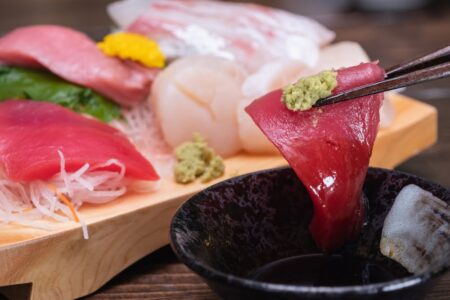
Soy sauce applied generously enough to saturate the rice is noticed immediately and understood as a signal that the diner is either unfamiliar with the format or does not particularly value the flavor of the fish. This is not a judgment on the diner but it does inform how the chef calibrates what to offer them.
Wasabi dissolved entirely into soy sauce is similarly read as a signal of habit rather than intention. A chef who has prepared a piece of nigiri with a specific amount of wasabi placed between the fish and the rice may make a quiet internal note that this particular diner is unlikely to notice that detail.
The diner who applies condiments lightly, eats each piece whole, and pauses briefly between pieces is communicating, entirely unconsciously, a level of engagement that most chefs respond to with a degree of additional attentiveness. The sushi chef perspective is that condiment use tells you almost as much about a diner as the order does.
8. What Happens Behind the Counter Before Service Begins
The preparation that precedes service is where a significant portion of the sushi chef perspective is applied. Before the first diner sits down, a chef has already assessed the condition of every fish species in the kitchen, made decisions about which will be offered as sashimi versus in rolls versus redirected to cooked preparations, prepared the rice to the correct temperature and seasoning, and organized the cutting board and tools for efficient service.
This pre-service preparation is also when the day’s menu decisions are made. A piece of fish that arrived in excellent condition becomes the species the chef will highlight in suggestions throughout service. A piece that arrived slightly past its peak may be used in preparations where additional flavors can complement what the fish offers rather than in plain sashimi where its limitations would be most visible.
9. The Details in Presentation That Chefs Track Consciously
Every piece that leaves the cutting board is evaluated before it is placed in front of the diner. A chef checks the slice thickness and consistency, the evenness of the rice mound, the placement of the fish relative to the rice, the positioning of any garnish, and the overall appearance of the piece as a complete object.
This evaluation happens in a fraction of a second for a chef who has developed their eye through thousands of repetitions. But it happens every time. A piece that does not meet the chef’s internal standard is corrected before plating, not after.
The intentionality behind presentation in Japanese cuisine, as covered in our post on the visual language of sushi presentation, is not aesthetic vanity. It is the visible expression of standards that apply equally to everything the diner cannot see.
10. What a Sushi Chef Wants Every Diner to Know
If there is a single consistent element across the sushi chef perspective, it is this: the food that arrives in front of you is the result of more care and more decision-making than the plate can communicate on its own.
The fish was evaluated before and during cutting. The rice was timed and adjusted throughout service. The piece was checked before it left the board. Every detail that went right is invisible. Only the result is visible, and the result is intended to make everything that preceded it feel effortless.
Eating with attention, even a small amount more than habit, honors that effort. It also makes the experience significantly more rewarding. A diner who notices the texture of the rice, the cleanliness of the cut, the flavor and finish of each species, and the way the condiments interact with the fish is receiving the full value of what the chef prepared. Most diners receive only a fraction of it.
11. Frequently Asked Questions
What does a sushi chef evaluate before cutting fish?
Before cutting, a sushi chef assesses the color consistency and vibrancy of the fish, the surface moisture, the firmness of the flesh, and the scent. These four dimensions together determine whether the fish is at its optimal window for raw service, needs to be redirected to cooked preparation, or should not be used at all.
How does a sushi chef adjust service based on what diners order?
The order communicates the diner’s experience level and preferences. A chef uses this reading to calibrate what additional items to suggest, how much explanation to offer, and how to pace the service. An experienced diner who orders adventurously may receive spontaneous suggestions from the chef. A less experienced diner ordering familiar items may receive those items executed with particular care and consistency.
Why does condiment use matter to a sushi chef?
Condiment use signals how much attention a diner is paying to the fish itself. A chef who has placed a specific amount of wasabi between fish and rice, or seasoned a piece before serving, notices when that detail is bypassed by a diner who dissolves wasabi in soy sauce or applies soy sauce generously. It informs how the chef interprets the table and adjusts accordingly.
What does a sushi chef notice about temperature during service?
A chef monitors the temperature of both the rice and the fish throughout service. Rice has a narrow optimal temperature range, and a chef adjusts the pace of use and preparation timing to keep it within that range. Different fish species are brought from refrigeration at different times depending on how much warming they benefit from before serving.
What is the most important thing a diner can do to get more from a sushi counter experience?
Pay attention. Eating each piece with a moment of focus rather than continuing conversation through the bite, using condiments with intention rather than habit, and engaging briefly with the chef when the opportunity presents itself all signal the level of attention that tends to bring the best of what the counter has to offer.
Key Takeaways
- The calm efficiency of an experienced sushi chef behind the counter is not the absence of complexity. It is the result of enough training that a continuous stream of evaluation and adjustment has become automatic.
- Before a knife touches fish, a chef assesses color consistency, surface moisture, firmness of the flesh, and scent. These four dimensions together determine whether the fish proceeds to raw service or is redirected.
- The first cut into a piece of fish provides immediate feedback about the structural condition of the flesh through how it responds to the blade, information the chef registers before the piece is ever plated.
- Temperature management for both rice and fish is an active background process throughout service. Different species are brought from refrigeration at different times based on how much warming benefits each one before serving.
- The order a diner places communicates their experience level and preferences. A chef reads this to calibrate what to suggest, how much explanation to offer, and how to pace the rest of service.
- Condiment use is observed and interpreted as a signal of engagement. A diner who applies soy sauce generously or mixes wasabi into the soy communicates something the chef notices and uses to adjust the table reading.
- Pre-service preparation involves every quality decision that determines what will be available and in what format throughout the meal, including which fish proceeds to sashimi and which is redirected to cooked preparations.
- Every piece is evaluated before it leaves the cutting board. The intentionality behind presentation is the visible expression of standards that apply equally to everything the diner cannot see.
- Diners who bring a small amount of additional attention to the experience receive a meaningfully richer version of what the chef prepared.
See the Craft From the Counter
The best way to experience the sushi chef perspective firsthand is to sit at the counter and pay attention. Explore what a sushi restaurant in Brooklyn, NY that brings genuine expertise and care to every piece looks like, and come see what you have been missing from your seat.
DISCLAIMER: Consuming raw or undercooked seafood carries food safety risks. Individuals who are pregnant, elderly, immunocompromised, or have underlying health conditions should consult a healthcare provider before consuming raw seafood.
References
- Japan Times. The path to becoming a sushi chef in Japan. https://www.japantimes.co.jp/life/2017/08/05/food/path-becoming-sushi-chef-japan/
- Serious Eats. Japanese knife technique and fish preparation. https://www.seriouseats.com/japanese-knife-guide-types