- August 23, 2026
- 10 min read
SASHIMI
Table of Contents
- 1. The Difference Between Eating and Tasting
- 2. Before the First Bite: What to Observe on the Plate
- 3. The Role of Smell in Evaluating Sashimi
- 4. Temperature and What It Does to Flavor
- 5. The First Bite: What to Notice
- 6. Flavor Profiles Across Common Sashimi Species
- 7. How Condiments Interact With Flavor
- 8. The Aftertaste and What It Tells You
- 9. Building a Tasting Sequence Across a Platter
- 10. How Tasting Attentiveness Improves Over Time
- 11. Frequently Asked Questions
Most people who eat sashimi regularly have never truly tasted it. Eating and tasting are different activities. Eating moves food from plate to mouth to swallow. Tasting pays attention to what happens in between, and for sashimi, a great deal happens in between.
Understanding how to taste sashimi properly transforms it from a pleasant meal into a genuine sensory experience. It also makes you a significantly better judge of quality, which changes what you notice, what you order, and what you remember from every plate that arrives in front of you.
1. The Difference Between Eating and Tasting
The distinction between eating and tasting is not about slowing down for its own sake. It is about directing attention to information that is already present in every bite but goes unnoticed when the act of eating is purely habitual.
When you eat sashimi without attention, you receive a general impression: fresh or not fresh, good or ordinary, something you would order again or something you would not. When you taste sashimi with attention, you receive specific information: the precise flavor of that species of fish, how the fat content is expressing itself in the texture, what the finish tastes like after the fish is gone, whether the temperature is right, whether the cut was clean enough to preserve the cellular structure.
Mindful eating practices have been studied in relation to overall food satisfaction and enjoyment. In the context of sashimi, the principles of mindful eating translate directly to a more specific, more rewarding, and more informative experience of one of the most nuanced foods available.
2. Before the First Bite: What to Observe on the Plate
Tasting sashimi properly begins before the first piece reaches your mouth. The visual inspection of the plate provides information that sets the context for everything that follows.
Color: Assess the color of each species on the plate. Tuna should be a deep, even red with no greyish tinting. Salmon should be a rich, consistent orange with visible fat striations running through the flesh. Yellowtail should appear pale and slightly translucent. White fish like flounder should look clean and almost crystalline in the right light. Inconsistent or dull color signals that the fish may have oxidized past its peak.
Surface moisture: Fresh sashimi has a moist, slightly glistening surface that reflects light evenly. Fish that has been sitting too long develops a dull, slightly dry appearance at the edges where the cut surface has been exposed to air.
Cut quality: Look at the edges of each slice. Clean, smooth edges indicate a sharp knife used with proper technique. Ragged or compressed edges indicate a dull blade or a sawing motion, both of which damage the cellular structure and affect texture and flavor release.
3. The Role of Smell in Evaluating Sashimi
Smell is the most powerful and most underused sense at the sashimi table. Before eating any piece, bring it briefly toward your face and notice what it communicates.
Fresh sashimi-grade fish has a clean, mild scent that carries a faint oceanic quality without any pronounced fishiness. The smell should be pleasant and neutral, suggesting the sea rather than announcing itself aggressively. What you should not detect is any strong fishy odor, sourness, or ammonia-like quality. These are signals of bacterial activity that indicate the fish has aged past the point at which it should be served raw.
The olfactory system’s role in taste perception is significant: a large portion of what we perceive as flavor is actually aroma detected retronasally as food is chewed. Paying attention to the smell of sashimi before eating primes the olfactory system and deepens the flavor experience when the first bite arrives.
4. Temperature and What It Does to Flavor
Temperature is one of the most important variables in how to taste sashimi and one of the least consciously attended to by most diners. Cold suppresses flavor compounds in fish. This is why sashimi served straight from refrigeration tastes flat and slightly muted compared to sashimi that has been allowed to approach room temperature.
The ideal serving temperature for sashimi is slightly below room temperature, warm enough that the fat in fatty species like salmon or yellowtail has begun to soften and release its flavor compounds, but cool enough that the freshness of the fish is still clearly expressed. A well-run kitchen manages this transition carefully. As a diner, being aware of the temperature at which your sashimi arrives helps you understand what you are tasting and contextualizes whether the flavor is fully expressing itself.
If sashimi arrives very cold, allowing it to rest for one to two minutes before eating can make a meaningful difference in what the flavor delivers.
5. How To Taste Sashimi Properly: What to Notice
When you take the first bite of a piece of sashimi, several things are happening simultaneously. Directing attention across these dimensions transforms what would otherwise be a single general impression into a set of specific observations.
Initial flavor: What is the first flavor that registers? For lean fish like flounder, it should be clean, mild, and subtly sweet. For fatty fish like salmon, it should be rich and slightly buttery. For tuna, it should be clean and meaty with a faint iron note that is characteristic of the species.
Texture on contact: How does the fish feel when the teeth first meet it? A clean, sharp cut produces a precise initial resistance before the flesh yields smoothly. A dull cut produces a slightly compressed, less defined initial texture.
Fat expression: As the fish is chewed, does the fat release into the mouth? In fatty species, this should produce a progressive richness that builds as the piece is eaten. The presence and quality of this fat release is one of the clearest markers of whether the fish is at peak freshness and whether it has been stored correctly.
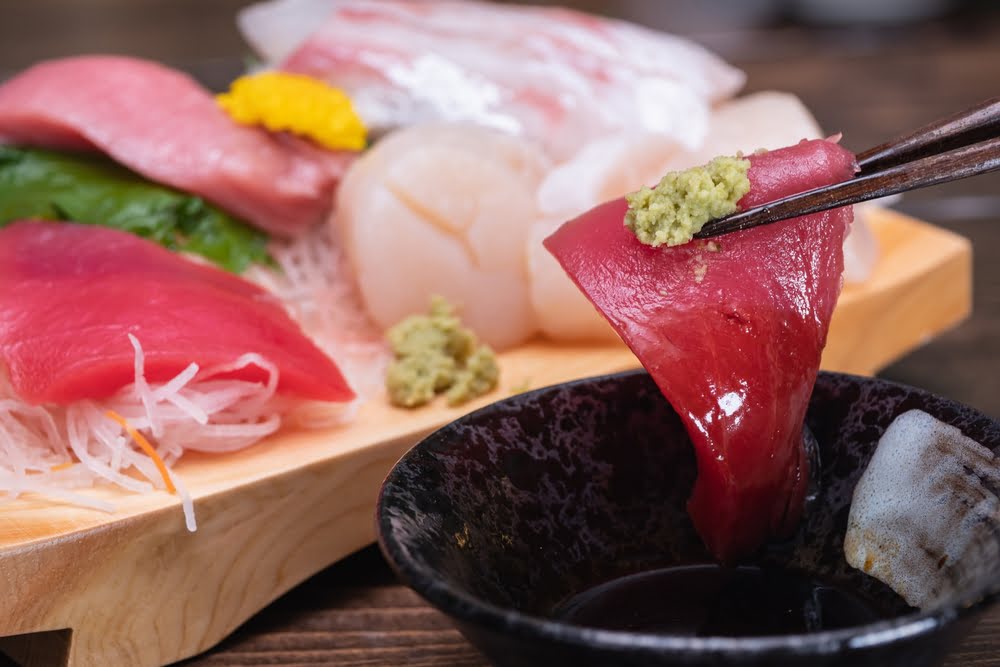
Integration with condiment: If wasabi or a light touch of soy sauce was applied, notice how it interacts with the flavor of the fish rather than overpowering it. The condiment should amplify or complement, not replace, the flavor of the species.
6. Flavor Profiles Across Common Sashimi Species
Part of how to taste sashimi properly is knowing what flavor profile to expect from each species so you can evaluate how well the specific piece in front of you is expressing those qualities.
Maguro (Tuna): Clean, meaty, slightly minerally. Lean cuts have a firm, precise texture. The flavor is assertive without being strongly fishy. A faint iron or metallic note is characteristic and should be present but not dominant.
Sake (Salmon): Rich, buttery, and slightly sweet with a soft, yielding texture driven by high fat content. Fat striations visible in the slice should translate directly to a silky mouthfeel. Well-sourced salmon at peak freshness has a clean, oceanic finish rather than a lingering fishy note.
Hamachi (Yellowtail): Mild, slightly sweet, with a silky texture that sits between the leanness of tuna and the richness of salmon. Often described as clean with a faint buttery quality. The finish is brief and refreshing rather than lingering.
Hirame (Flounder): Very delicate, with a subtle sweetness and a clean, almost neutral flavor that rewards quiet attention. The texture is firm and precise. Flounder is one of the species where the quality of the knife cut is most clearly expressed in the eating.
Hotate (Scallop): Sweet, oceanic, and distinctly different from fish-based sashimi. The texture is soft with a slight resistance that gives way cleanly. The sweetness of fresh scallop is one of the most immediately identifiable flavor qualities on any sashimi plate.
For a broader guide to the species most worth exploring, our post on underrated sashimi cuts every diner should try covers many of these species and others in detail.
7. How Condiments Interact With Flavor
Understanding how to taste sashimi properly includes understanding how condiments alter what you are tasting. Each condiment changes the flavor of the fish in a specific way, and using them with awareness produces a more informative experience than applying them by habit.
Soy sauce adds salt and umami depth. Applied lightly to the fish side of a slice, it enhances lean fish that benefits from a small seasoning boost. Applied too generously, it replaces the flavor of the fish entirely. Tasting a piece with no soy sauce first, then a second piece of the same species with a light touch, is one of the most direct comparisons available at the sashimi table.
Wasabi adds heat and a sharp, briefly aromatic quality. A small amount placed directly on the fish provides a controlled contrast that sharpens the perception of the fish’s flavor rather than masking it. A large amount overwhelms everything beneath it.
Pickled ginger resets the palate between species. Eating a small piece of gari and then pausing before the next piece allows the olfactory and taste systems to reset, making the next species arrive on a genuinely clean palate. The difference this makes in how clearly each species is perceived is significant and is worth testing deliberately.
8. The Aftertaste and What It Tells You
The finish of a piece of sashimi, the flavor that remains after swallowing, is one of the most informative dimensions of how to taste sashimi and one of the least attended to. A clean, pleasant finish that dissipates in a few seconds indicates fresh, high-quality fish handled and cut correctly. A lingering fishiness, a bitter edge, or an unpleasant aftertaste indicates a quality or freshness problem somewhere in the chain from sourcing to slicing.
Well-sourced salmon at peak freshness finishes clean. Well-sourced tuna finishes with a brief mineral note that fades quickly. Flounder and other delicate white fish finish almost neutrally, which is part of their appeal. If the finish of any piece is noticeably unpleasant or disproportionately strong relative to the initial flavor, note it as quality information.
9. Building a Tasting Sequence Across a Platter
How to taste sashimi properly across a full platter involves sequencing the pieces in a way that preserves the palate and allows each species to be evaluated freshly.
The principle is light to rich, following the same logic that guides good wine service or a well-designed tasting menu. Begin with the most delicate, subtly flavored species: flounder, sea bass, scallop. Move through mid-range species like yellowtail. Arrive at richer, more assertive species like salmon and tuna toward the end of the sequence. Use pickled ginger between species as a genuine palate reset rather than as a side dish.
This sequence is covered in detail in our post on how to read a sashimi platter and what every element is telling you, which provides the full context for approaching a platter as a composed tasting experience rather than a collection of individual pieces.
10. How Tasting Attentiveness Improves Over Time
The skills involved in how to taste sashimi properly develop with repetition. The first time you consciously attend to the smell of a piece of fish before eating it, you may not notice much beyond fresh or not fresh. After several visits with that same intention, the range of what you perceive expands. You begin to notice differences between species that previously seemed similar. You begin to register the quality of the cut in the texture of the first bite. You begin to evaluate the finish as a specific dimension rather than a general impression.
This progressive refinement of attention is one of the most rewarding aspects of developing a serious relationship with sashimi. The food itself does not change, but your capacity to receive what it is offering does.
11. Frequently Asked Questions
What does fresh sashimi taste like compared to less fresh sashimi?
Fresh sashimi has a clean, mild flavor with a faint oceanic quality and a pleasant, brief finish. Less fresh sashimi has a more pronounced fishiness that becomes stronger toward the finish, a slightly sour or off note detectable on the palate, and a less defined texture resulting from cellular breakdown. The difference is perceptible even to inexperienced diners once they know what to attend to.
Should I eat sashimi without any condiments to taste it properly?
Trying at least one piece of each species with no condiments before adding soy sauce or wasabi gives you the clearest baseline flavor of the fish itself. This is particularly valuable for delicate species like flounder or scallop where light seasoning can significantly alter what you taste. It is not required but produces the most informative first impression.
Does the temperature of sashimi affect the flavor?
Yes significantly. Cold temperatures suppress flavor compounds and produce a flatter, more muted impression of the fish. Sashimi allowed to approach slightly below room temperature before eating delivers a fuller, more expressive flavor profile. If your sashimi arrives very cold, allowing it to rest for one to two minutes before eating is worth the wait.
What is the correct order to eat sashimi on a platter?
Start with the most delicate and mildly flavored species, such as flounder or scallop, and progress toward richer, more assertive species like salmon and tuna. Use pickled ginger between pieces as a palate cleanser. This light-to-rich sequence preserves the palate’s sensitivity and allows each species to be experienced at its best.
How do I know if the sashimi I am eating is genuinely high quality?
Fresh scent with no pronounced fishiness, vibrant consistent color with no grey edges, clean smooth cut surfaces, a texture that yields precisely when bitten, and a clean pleasant finish are the primary quality indicators accessible at the table without specialized equipment. The more attentively you observe these dimensions, the more reliably you can evaluate quality across different plates and different restaurants.
Key Takeaways
Learning how to taste sashimi properly means directing conscious attention to the sensory dimensions of each piece rather than moving through the plate on autopilot. Visual inspection before the first bite provides information about color, surface moisture, and cut quality that previews the eating experience accurately. Smell is a powerful and underused evaluation tool that gives direct information about freshness before a single bite is taken. Temperature significantly affects flavor expression, and allowing very cold sashimi to rest briefly before eating produces a fuller, more informative taste. The first bite rewards attention to initial flavor, texture on contact, fat expression, and condiment integration simultaneously. Different species carry distinct flavor profiles that become clearer and more distinguishable with deliberate practice. Condiments used with awareness enhance rather than replace the flavor of the fish. The aftertaste is one of the most reliable quality signals available at the table and should be attended to as a specific dimension rather than dismissed as part of a general impression. A light-to-rich tasting sequence across a platter preserves the palate and gives each species the best context in which to be evaluated. These skills develop progressively over time, and each visit to a quality sashimi kitchen adds new reference points that deepen the experience going forward.
Put Your Palate to the Test
If you want to put these tasting principles into practice with genuinely fresh, hand-selected fish, explore what a sushi restaurant in Brooklyn, NY committed to sourcing and preparation quality looks like. Come in with attention and let every piece tell you something.
DISCLAIMER: Consuming raw or undercooked seafood carries food safety risks. Individuals who are pregnant, elderly, immunocompromised, or have underlying health conditions should consult a healthcare provider before consuming raw seafood.
References
- Harvard T.H. Chan School of Public Health. Mindful eating. https://www.hsph.harvard.edu/nutritionsource/mindful-eating/
- Serious Eats. Flavor and aroma in food preparation. https://www.seriouseats.com/the-food-lab-how-to-make-the-best-sushi-rice